When a "Quick Update" No Longer Works
A kitchen can look freshly painted and still feel wrong every time you walk into it. In Palm Beach, it happens often: a Bermuda-style home near the Intracoastal with new hardware, white cabinets, updated pendants, maybe even a new faucet, yet the space still feels tired, dim, and cramped. The problem is not the last round of updates. The problem is the bones of the room.
At a certain point, small changes stop moving the needle. You can swap barstools and repaint cabinets again, but if the layout, systems, or base materials are not right for how you live or for our coastal climate, the kitchen will never really work. That is where many Palm Beach County homes find themselves, especially older condos, historic properties, and long-loved single-family homes.
From our perspective, there is a clear shift between a space that just needs a refresh and a space that is asking for a full rethink. Knowing the difference helps you avoid pouring more time and money into fixes that cannot solve the real issues with your kitchen and bath in Palm Beach County.
When Layout Fights the Way You Live
Some kitchens are difficult not because they are old, but because the layout was never right for the way you live. You feel it during the first winter party or Sunday brunch. There is a traffic jam between the sink and the refrigerator. Guests hover in the wrong corner. You keep walking laps between prep space and trash.
In Palm Beach County, we often see:
- Tight galley kitchens in mid-century condos with no place for more than one cook
- Awkward pass-throughs in Mediterranean revival homes that break up counter runs
- Small, isolated kitchens in historic houses that ignore how people gather now
Common signs the layout is the real problem, not the finishes:
- Circulation bottlenecks when more than two people are in the room
- No landing space next to the refrigerator, oven, or pantry
- Prep, cooking, and cleanup zones that are too far apart
- Seating that blocks appliances or storage
Changing this is often more complex than removing a wall. In oceanfront condos, for example, there may be concrete shear walls and post-tension slabs that cannot be altered casually. Columns can hide inside walls. Building rules may limit where plumbing and vents can move. A thoughtful remodel reads the original plans, works with engineers, and respects those limits while still improving sightlines and flow.
Once you start adjusting walls or openings, other changes follow: new lighting layers to brighten deeper spaces, better ventilation paths, smarter storage in corners, and appliance placement that matches how you actually cook. When simply moving around the kitchen feels off every single day, a planned renovation is usually more honest than another round of cosmetic updates.
Aging Systems Behind Beautiful Surfaces
Many Palm Beach kitchens look fine on the surface but hide aging systems behind the drywall. In mid-century houses and older condos, you may still have original plumbing and wiring, and these do not always keep up with current appliances and daily use.
In our climate, humidity and salt air speed up wear. We often find:
- Corroded shutoff valves behind sinks
- Rusting supply lines to icemakers and dishwashers
- Delaminated plywood or swollen subfloor near dishwashers
- Light fixtures and trims discolored by salt air
You may notice clues long before anything fails outright:
- Outlets that trip when you run the oven, toaster, and coffee maker together
- Slow or smelly drains under an otherwise pristine sink
- Inconsistent water pressure at pot fillers or prep sinks
- Weak range hood performance that never really clears steam
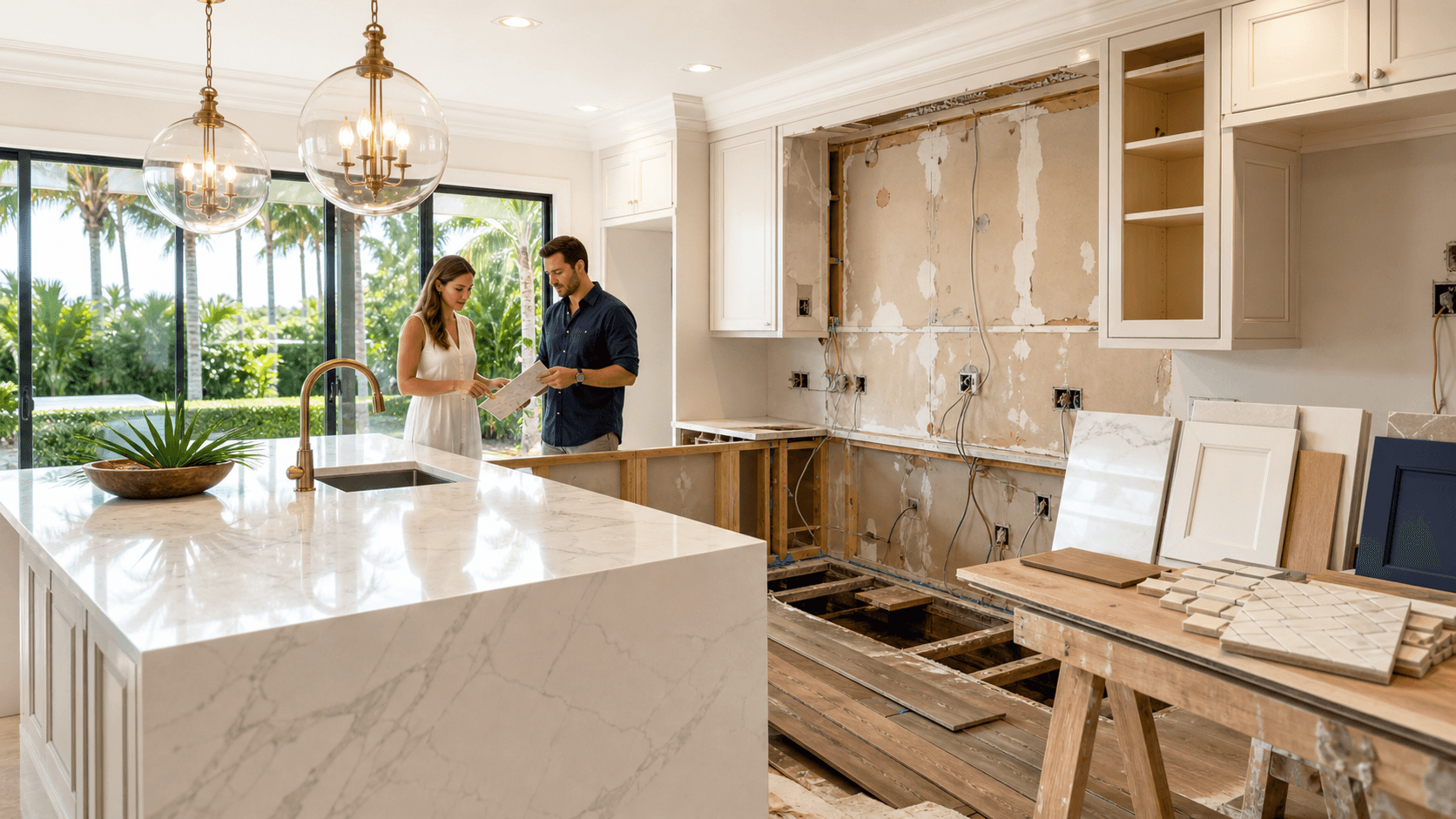
When you are already opening walls for new cabinetry or stone, it is usually the right moment to deal with these hidden issues. That can mean replacing old supply lines, upgrading wiring for modern cooktops and refrigeration, or adding dedicated circuits for specialty appliances. It is also the time to bring GFCI and other safety features up to current standards.
Once you reach this level of work, the project is no longer a simple refresh. It becomes a true renovation, with code compliance, insurance expectations, and long-term durability all in play.
Finishes That Cannot Keep Up With Coastal Life
Not every new finish is suited to coastal life. We often walk into kitchens that were updated a few years ago with builder-grade cabinets and basic laminate counters, and they already look tired. The problem is not that they are old. The problem is that the materials were never a match for humidity, daily cleaning, and salt in the air.
You might see:
- Cabinet doors that swell and rub in the summer, then gap in the drier months
- Toe kicks that bubble from regular mopping and small leaks
- Caulk lines around the sink that crack, mold, and need constant touchup
- Soft stone tops etched by citrus, wine, or cleaning products
For Palm Beach homes, we typically look for materials and assemblies that stand up better, such as:
- High-quality plywood cabinet boxes or similar moisture-resistant construction
- Properly sealed natural stone or durable porcelain slabs
- High-performance finishes on brass or stainless fixtures
- Tile assemblies that include true waterproof membranes, not just grout
The architectural style of your home matters too. A Mediterranean revival space may call for inset doors and classic details, while a coastal modern condo might feel better with flatter panels and more integrated pulls. In a Bermuda-style home, you may want to preserve original millwork and blend it with updated stone and fixtures.
When you find yourself constantly repainting doors, re-caulking edges, or polishing out stains, the issue is usually deeper than ordinary wear and tear. A coordinated renovation that respects the climate, the structure, and the design language of the house solves problems that quick touchups never can.
Condo and HOA Realities You Cannot Decorate Around
Many Palm Beach residents live in condos or communities with active associations. These buildings often have firm rules about what happens behind the walls, even for work that seems simple on the surface.
Common constraints include:
- Fixed plumbing stacks that limit how far you can move sinks
- Specific rules for range hood exhaust and makeup air
- Quiet hours and elevator scheduling that shape demolition and deliveries
- Strict requirements for waterproofing and sound control between units
You can usually tell the work is bigger than a refresh when:
- You want to move a sink off a shared wall or rotate the island plumbing
- You are considering gas where the building is electric only
- You want a larger, heavier stone island in a condo that needs engineering review
Timing matters too. Many buildings prefer heavier work in summer, when seasonal residents are away. That means approvals, association documents, and contractor planning need to be in place well before the first day of demolition. A well-planned, board-compliant renovation becomes the moment to correct long-standing kitchen issues instead of continuing to work around them with small décor changes.
When a Full Renovation Is the More Responsible Choice
When you step back and see all the signs together, the picture usually becomes clear. The layout fights your daily life. The systems in the walls are aging. The finishes keep failing in the humidity. The building rules push you toward a more organized, professional plan. At that point, another coat of paint or set of pendant lights is not just unhelpful, it can actually delay the work that really needs to happen.
A full renovation, especially in higher-value Palm Beach properties, can be a responsible way to approach a kitchen with multiple, overlapping problems. It allows you to address layout, structure, systems, and finishes in one coherent plan, rather than layering small fixes on top of each other. The result is that same Bermuda-style home near the Intracoastal; now the kitchen finally matches the way its owners live, not because of one trendy material, but because every part of the room has been thoughtfully rebuilt for this climate, this architecture, and this stage of life.
Get Started With Your Project Today
If you are ready to update your space with thoughtful design and quality craftsmanship, we are here to help guide every step. Explore our kitchen and bath remodeling in Palm Beach County to see how H & H Signature Renovations can bring your ideas to life. Then contact us so we can discuss your goals, timeline, and budget and start planning your renovation with clarity and confidence.