Rethinking Luxury for Palm Beach County Heat
True luxury in Palm Beach County is not just marble, custom millwork, and a water view. It is walking upstairs on a September afternoon and feeling the air stay as calm and cool as your terrazzo entry floor. When the sun is high, the humidity is heavy, and the salt air is working on every exposed surface, the house either holds together or it does not.
Here, roofs are often Bermuda or Mediterranean revival, many coastal modern homes are wrapped in glass, and HOAs and historic rules shape every choice. The real work happens quietly behind the finishes. Thoughtful luxury remodeling in Palm Beach County means rethinking structure, materials, and detailing so the home feels composed, even in the late-summer heat that never really goes away.
Sun, Shade, And Orientation In Real Neighborhoods
On the ocean side, the light is bright and sharp. Across the Intracoastal, west-facing lanais that feel perfect in January can be almost unusable in September afternoons. East and west exposures matter here more than many people realize.
When we remodel, we pay more attention to how the house meets the sun than to how many square feet of glass we can add. Instead of only expanding openings, we often.
- Extend roof overhangs or add a deeper fascia
- Use loggias and covered terraces to frame views
- Introduce second-floor balconies that shade lower windows
- Specify Bahama or colonial shutters to filter glare
In areas like Palm Beach island or older parts of West Palm, exterior changes often need to stay quiet. That is where small moves do the heavy lifting. Wider eaves that match existing profiles, slightly projecting stucco surrounds that turn strong light into soft shadow, or recessing doors a few inches can lower solar gain while keeping the architecture in character with its neighbors.
Cool Interiors Start With The Envelope
In this climate, a high-end remodel that starts with light fixtures and stone slabs is starting in the wrong place. Comfort begins in the building envelope, the parts of the home that separate inside from outside: roof, walls, windows, and doors.
On roofs, we often look at:
- High-albedo tile or metal in light, reflective colors
- Roof assemblies that ventilate heat away from the living space
- Closed-cell foam at the roof deck, especially under low Bermuda slopes
At exterior walls, continuous insulation and better air sealing can change how a room feels by mid-afternoon. Coastal modern homes with large openings benefit from rigid insulation outboard of the structure, plus careful flashing that keeps water and moisture where they belong.
Glazing is its own discipline here. Impact-rated windows and doors with low solar heat gain glass, selective tinting, and thermally broken frames can cut radiant heat without losing views. We pay close attention to jambs, sills, and heads so metal does not bridge outdoor heat straight into the room. Done well, the house still reads as open and coastal, but the interior stays calm.
Materials That Belong In A Subtropical House
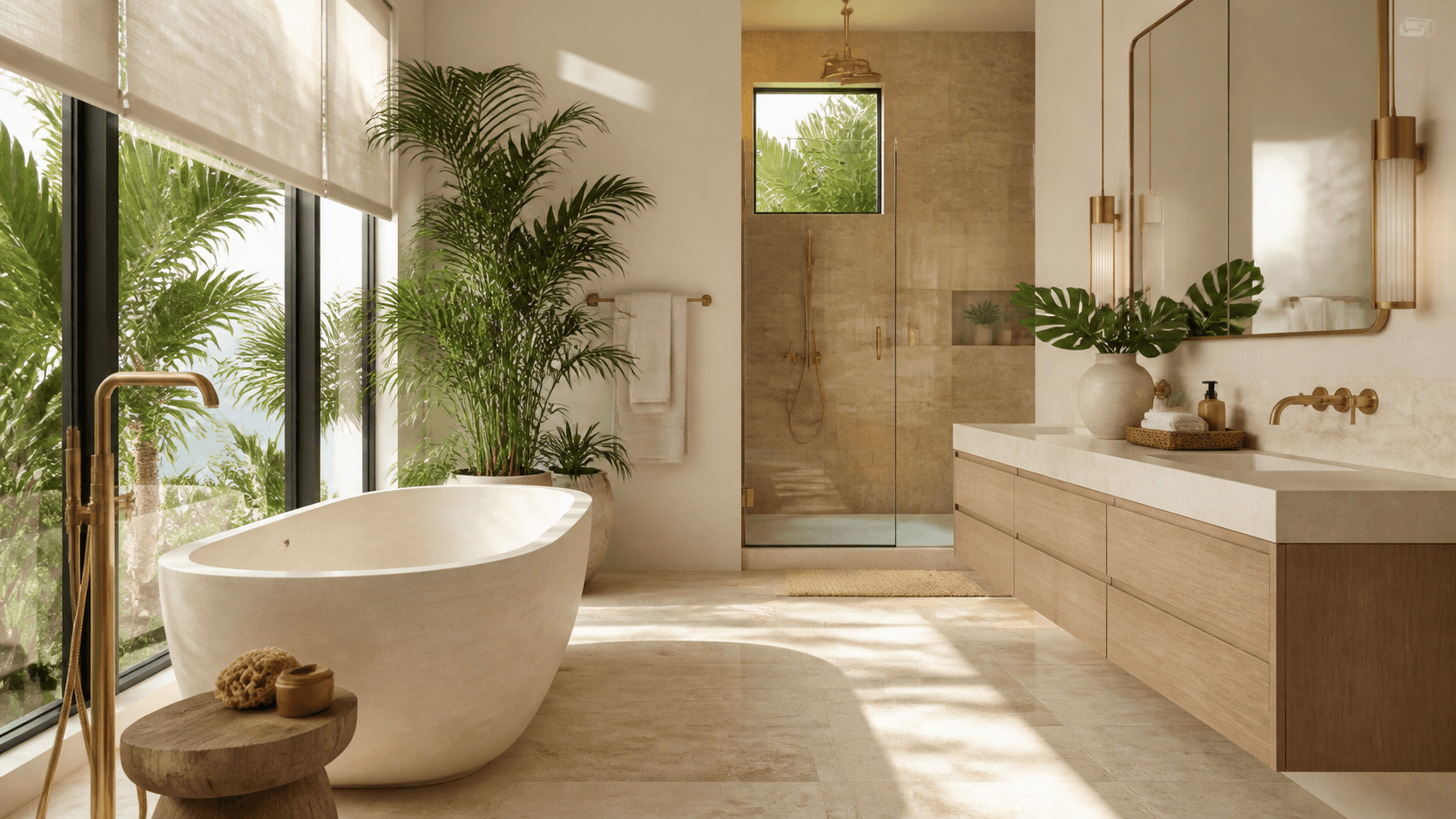
Not every beautiful material belongs in constant humidity and salt air. The trick is choosing finishes that feel refined but still make sense for Palm Beach County.
For flooring, we often look to:
- Large-format porcelain that mimics limestone or travertine
- Honed shellstone or coral stone at covered outdoor areas and select interiors
- Terrazzo in entries, galleries, and ground-floor circulation zones
- European oak with a matte oil finish in lower-risk, low-splash areas
Cabinetry and millwork need to be built for humidity. Marine-grade plywood boxes stay flatter than standard boxes. Rift-cut white oak, teak, and walnut veneers handle movement better when paired with high-performance finishes. In tall pantry and laundry cabinets, discreet ventilation helps avoid that warm, closed-up smell that can happen here by late afternoon.
Salt air is rough on metal. We tend to favor:
- Stainless hinges and fasteners
- PVD-finished brass levers and pulls
- Quality powder-coated aluminum for railings and exterior details
Uncoated steel, mixed-metal assemblies, and bargain hardware tend to show the climate quickly. In a luxury setting, that early wear rarely feels charming.
Cooling Strategy Beyond Bigger AC
More AC alone is not a strategy, especially in a large Palm Beach home. Mechanical design should sit side by side with architecture and interiors.
Right-sized, variable-speed HVAC systems that match the way a home is actually used can keep temperatures steady without constant cycling. Zoning by exposure and use helps: the glazed great room, the sleeping wing, the kitchen and service core. Supply locations are drawn with the ceilings in mind, so coffered details and plaster work do not get cut up by random vents.
Then there are the quiet helpers:
- Ceiling fans treated as design pieces in verandas, great rooms, and bedrooms
- Operable skylights or clerestory windows in stairwells that release trapped heat
- Cross-ventilation in Bermuda and Mediterranean revival plans that were originally meant to breathe
As homes are sealed more tightly, indoor air quality matters more. Dedicated dehumidification, controlled fresh air intake, and low-profile linear diffusers keep humidity, odors, and noise in check without breaking the clean lines of a coastal modern interior.
Kitchens, Baths, And Storage For A Long Hot Season
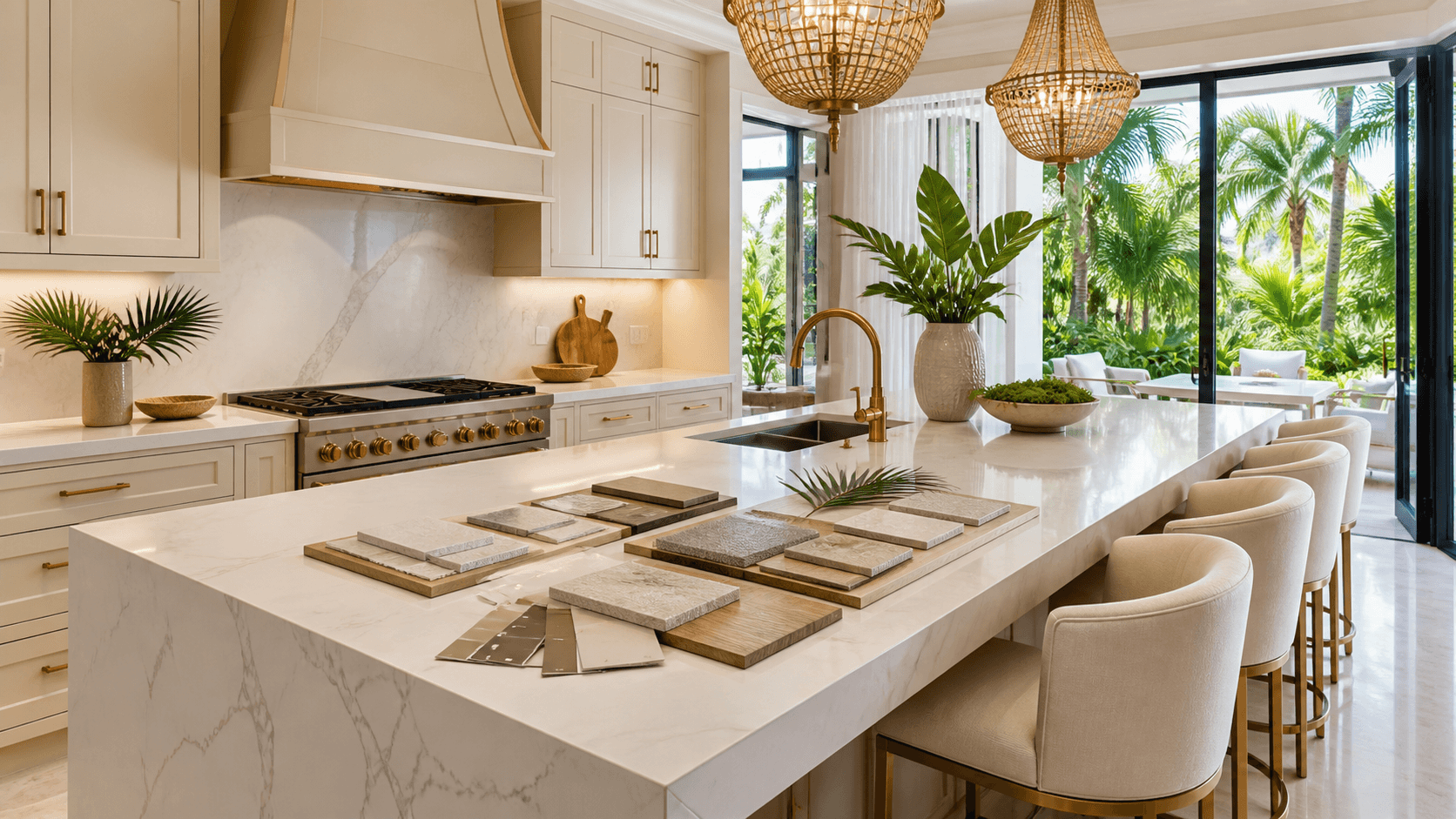
Heat and humidity shape how kitchens work here. Surfaces need to feel refined but stand up to daily use and constant AC. For perimeter counters, durable natural stone or sintered slabs that handle spills and sun are often preferred. Induction cooktops reduce ambient heat, which matters when cooking in an open plan that ties straight into the family room.
Ventilation hoods need to be properly ducted and sized. Recirculating hoods struggle in sticky air, especially when the space opens to a great room and covered patio.
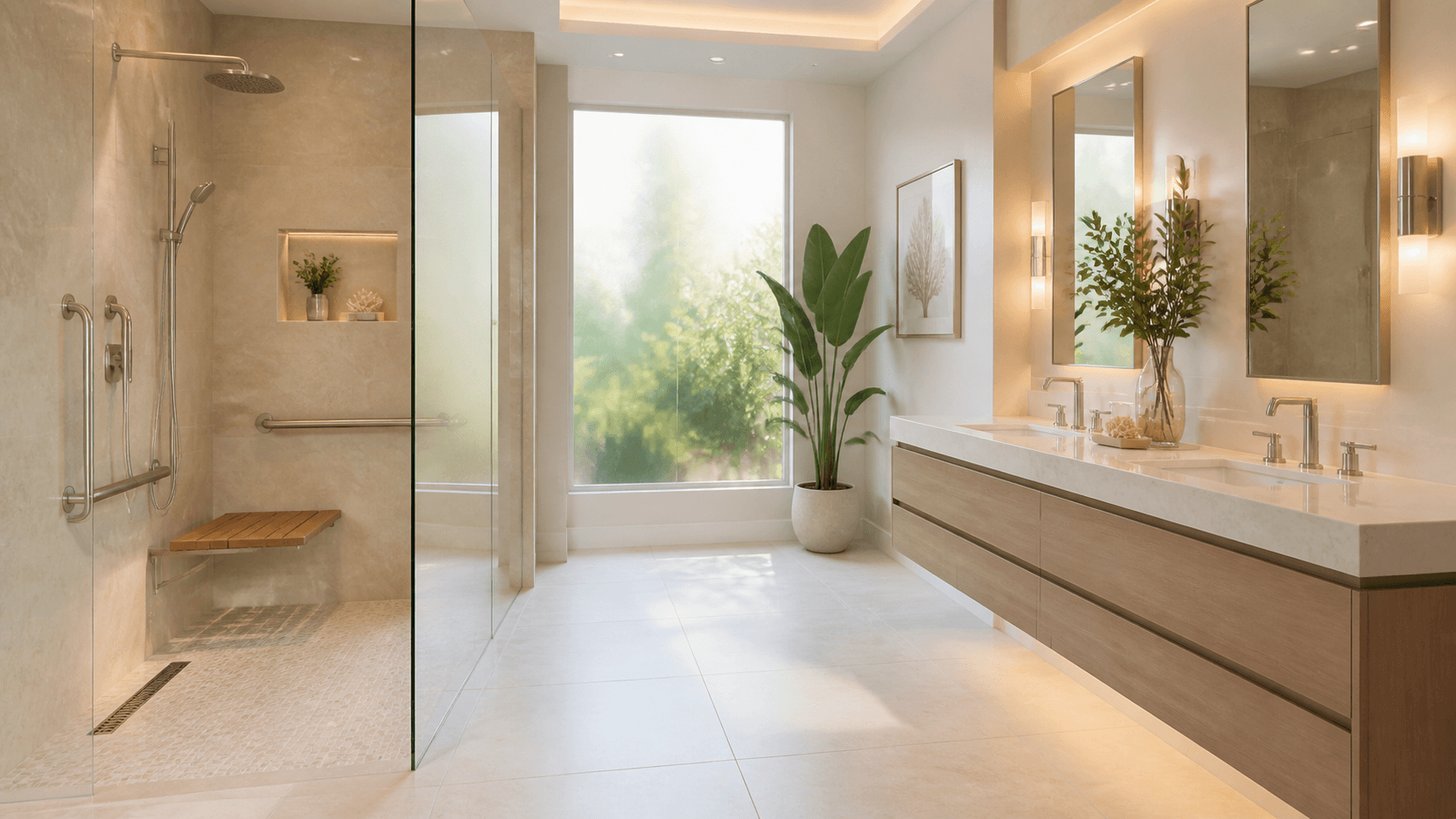
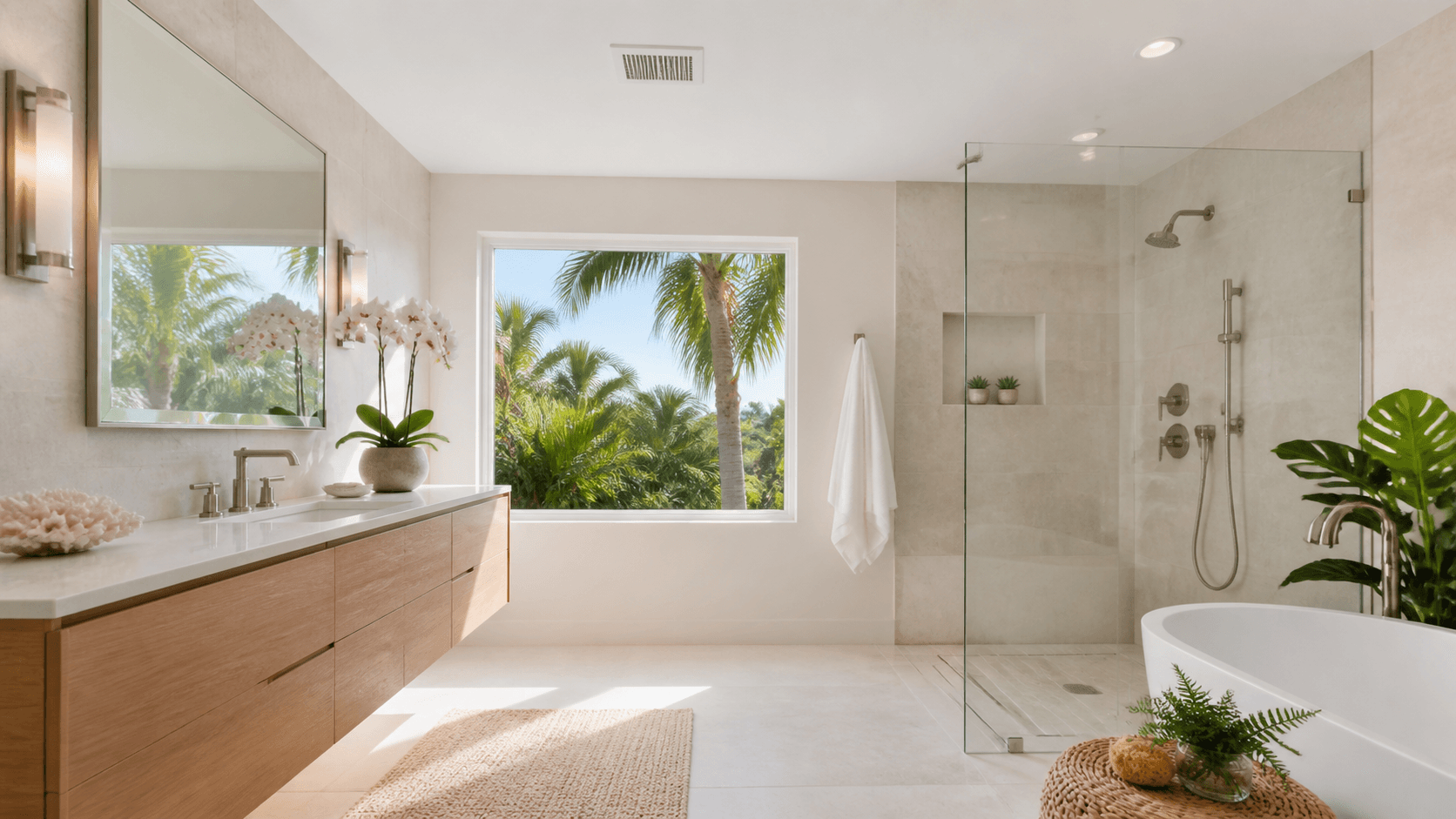
Baths in this climate are hard-working. Showers see use year-round, often more than once a day. A few details tend to perform well:
- Large-format wall and floor tile to minimize grout
- Solid-surface or tiled shower pans that move water quickly
- Curbless entries with subtle, consistent slope
- Concealed linear drains that handle volume without calling attention to themselves
Storage and utility spaces also need to be treated as part of the conditioned home. A pantry that sits off a west-facing wall should be cooled and shaded, not just shelved. Wine storage needs protection from afternoon sun. Laundry rooms do better with exterior walls for venting, dehumidification, and natural light. Drop zones near pool entries should be ready for sandy towels and wet bags, with flooring and built-ins that do not complain.
Planning A Remodel That Still Feels Good In September
The best way to plan is to live in the house with a notebook during late summer. Notice the rooms that are avoided after noon, the stair hall that feels hotter at the top, the glare on the west glass that has you pulling shades every day.
Bring those observations to the design team. Prioritize orientation fixes, envelope upgrades, and mechanical strategy along with new stone, cabinets, and lighting. When structure, materials, and systems are all chosen for this specific climate, luxury becomes quieter: a home that suits its street, feels cool and unhurried even in September heat, and is detailed to age gracefully in Palm Beach County.
Get Started With Your Project Today
Transform your vision into a refined, livable reality with our tailored approach to luxury home remodeling in Palm Beach County. At H & H Signature Renovations, we collaborate closely with you to align every detail with your lifestyle, architecture, and long-term goals. Schedule a design consultation to explore options, timelines, and budget with our expert team, or contact us with any questions before you begin.