Bathrooms That Stand Up to Palm Beach Air
A marble shower on Palm Beach Island can look flawless on day one. The veining is soft, the glass is clear, the vanity doors close with a quiet click. Then one summer passes and small flaws start to show: faint hairline cracks along the grout, vanity doors that no longer sit straight, mirrors that fog and never quite clear. The finishes still look expensive, but the room feels tired.
That is what constant humidity, salt in the air, and daily steam do here. The dew points are high, many homes have less cross breeze than they used to, and older condo and historic building cores were never designed for this much hot shower water. A bathroom remodel in Palm Beach Island works best when it is treated as a humidity system, not just a pretty update. Fixtures, layout, materials, and ventilation all need to work together so the room stays calm, dry, and quiet even in the thick of August.
Reading Your Existing Bathroom Like a Climate Map
Before anyone sketches a new layout, it helps to read the room like a map of moisture. Walk in after a normal shower and notice what happens.
Look for signs like:
- Which mirror fogs first and which edges clear last
- Spots where paint bubbles or peels, usually above showers or near exterior corners
- Corners where mildew always returns, no matter how often they are cleaned
- Whether the floor and walls are still damp hours after use
On Palm Beach Island, there are some patterns that appear again and again. Exterior walls stay warm, so steam clings there. Shared condo walls often have little or no insulation, so they hold sound and moisture. Slab floors can bring vapor up from below, which is tough on thin tile and wood. Historic plaster in older Bermuda and Mediterranean revival homes dislikes constant, trapped steam.
Humidity can also get trapped by details that feel solid but work against airflow, such as:
- Old vent fans that are noisy but weak
- Fans vented into an attic or chase instead of outdoors
- Tight new windows with no trickle air
- Heavy solid-core doors with no undercut at the bottom
Before a remodel, a good contractor will usually check the basics: how many cubic feet of air the current fan actually moves, where supply and return AC vents are, how much gap is under the door, and whether there is any existing vapor barrier behind tile or around the tub. That information shapes what happens next.
Humidity-Smart Layouts for Island Homes
The floor plan sets the tone for how steam behaves. Even in a modest condo bath, wet zones and dry zones can be separated so the whole room does not feel like a sauna.
Layout moves that work well here include:
- Positioning the shower on the same side as an exterior wall and the exhaust fan
- Keeping the vanity and storage in the driest corner of the room
- Creating a clear drying zone just outside the shower entrance
On Palm Beach Island, narrow condo baths with fixtures in a line, original maid's baths tucked into odd corners of classic homes, and long secondary baths with a single small window at one end are common. A small change, like shifting the shower head away from the door opening, can keep steam from rolling straight into the hallway. Raising the shower curb slightly can help contain water so it drains properly instead of tracking across the main floor.
Privacy and airflow should work together. Solid walls that block sightlines also block air. Instead, many designers favor:
- Fixed glass panels instead of full-height solid walls
- Transom windows above doors where style allows
- Thoughtful door undercuts that let conditioned air move while still feeling private
These moves respect the architecture, keep the space feeling open, and let humidity find its way out instead of sitting at eye level.
Materials That Actually Like Humidity
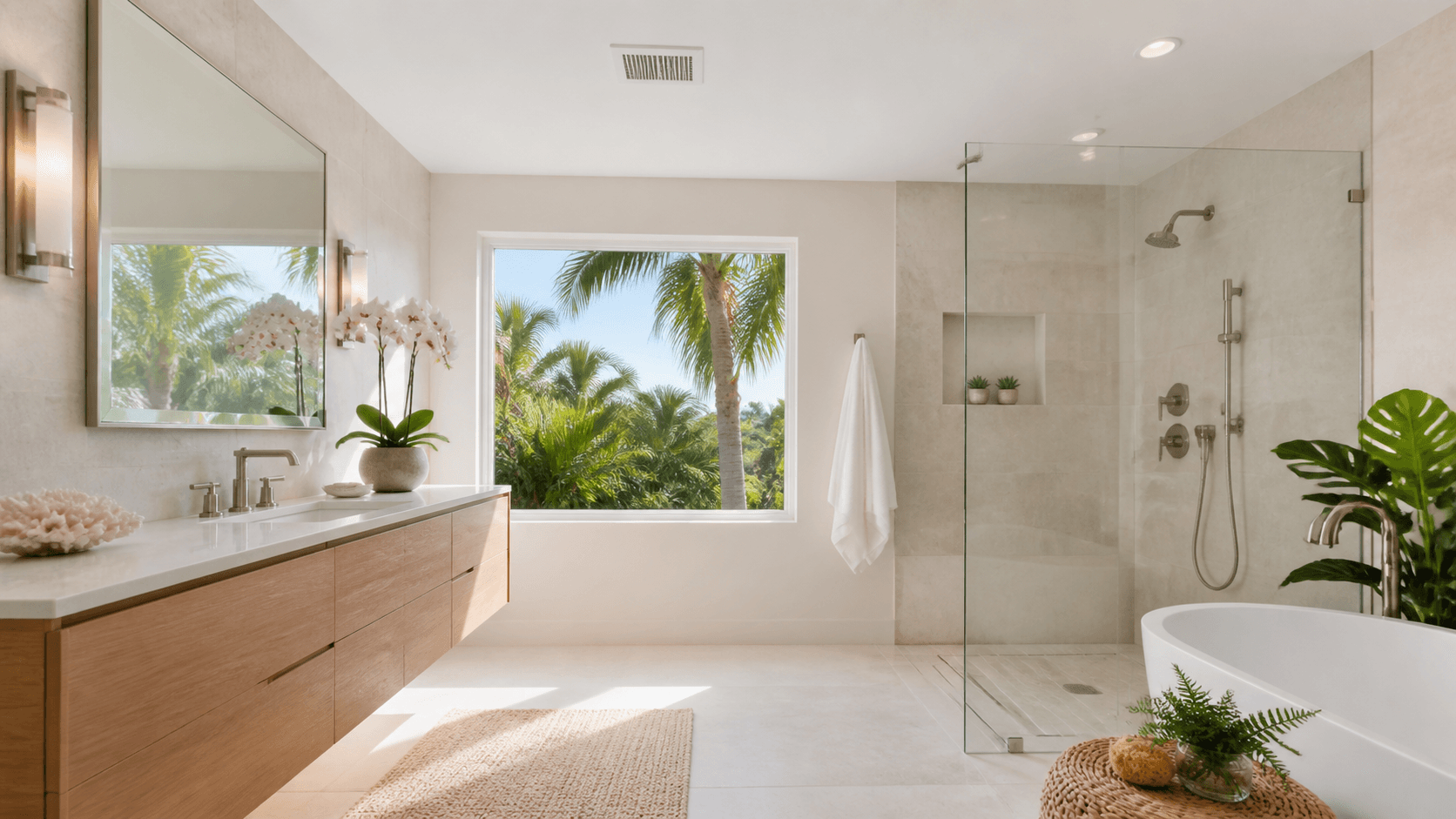
The right layout only works if the materials can handle constant moisture. In showers and on floors, porcelain tile is a strong choice for Palm Beach Island, especially large-format pieces with rectified edges that give tighter grout joints. When stone is nonnegotiable, honed marble tends to be preferable to polished. The softer sheen is more forgiving of etching and water marks. On shower floors, small mosaics with some texture give better grip and better drainage.
Cabinetry is a major test point in this climate. Instead of particleboard that swells in one season, it is worth considering:
- Marine-grade or high-quality plywood cabinet boxes
- High-pressure laminates or veneers that are fully sealed
- Solid wood doors with careful edge sealing on all sides
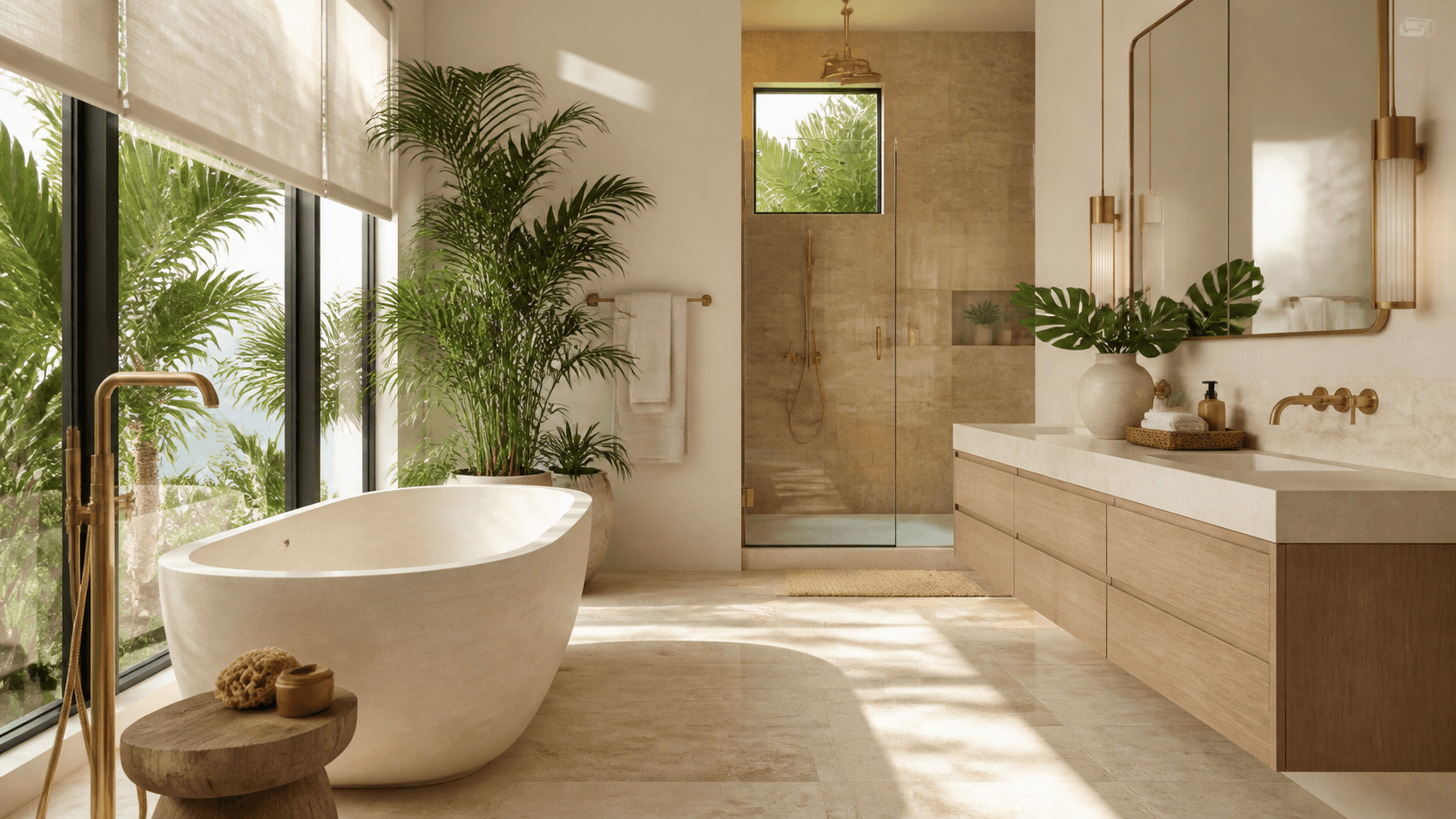
For fixtures and hardware, the goal is to stay ahead of corrosion. Solid brass with durable finishes, quality stainless drains, and well-made hinges and pulls hold up better in salty air. In certain condo baths where thickness and weight are limited, solid surface shower bases can be a smart move, since they combine a clean look with controlled slope.
Behind the visible finishes, the structure needs to be moisture-aware. That often means cement backer board behind tile, cementitious base coats in older homes that still use plaster, and bathroom-rated paints on walls and ceilings. In all-shower rooms, a tiled or microcement ceiling can make sense, as long as the ventilation is designed to match.
Ventilation, Drainage, and the Quiet Work of Drying Out
The real work of a bathroom remodel in Palm Beach Island happens in the quiet details that rarely show. Ventilation sits at the top of that list. Fans need to be sized to the actual cubic footage of the room and the length of the duct run, not just the square footage on paper. The better models clear air quickly without sounding like a plane taking off, which makes people more likely to use them.
In condos and coop buildings, there are extra layers to consider:
- Limited options to penetrate exterior walls
- Shared risers and vent stacks that affect where fans can tie in
- HOA rules about working hours and any changes to the exterior
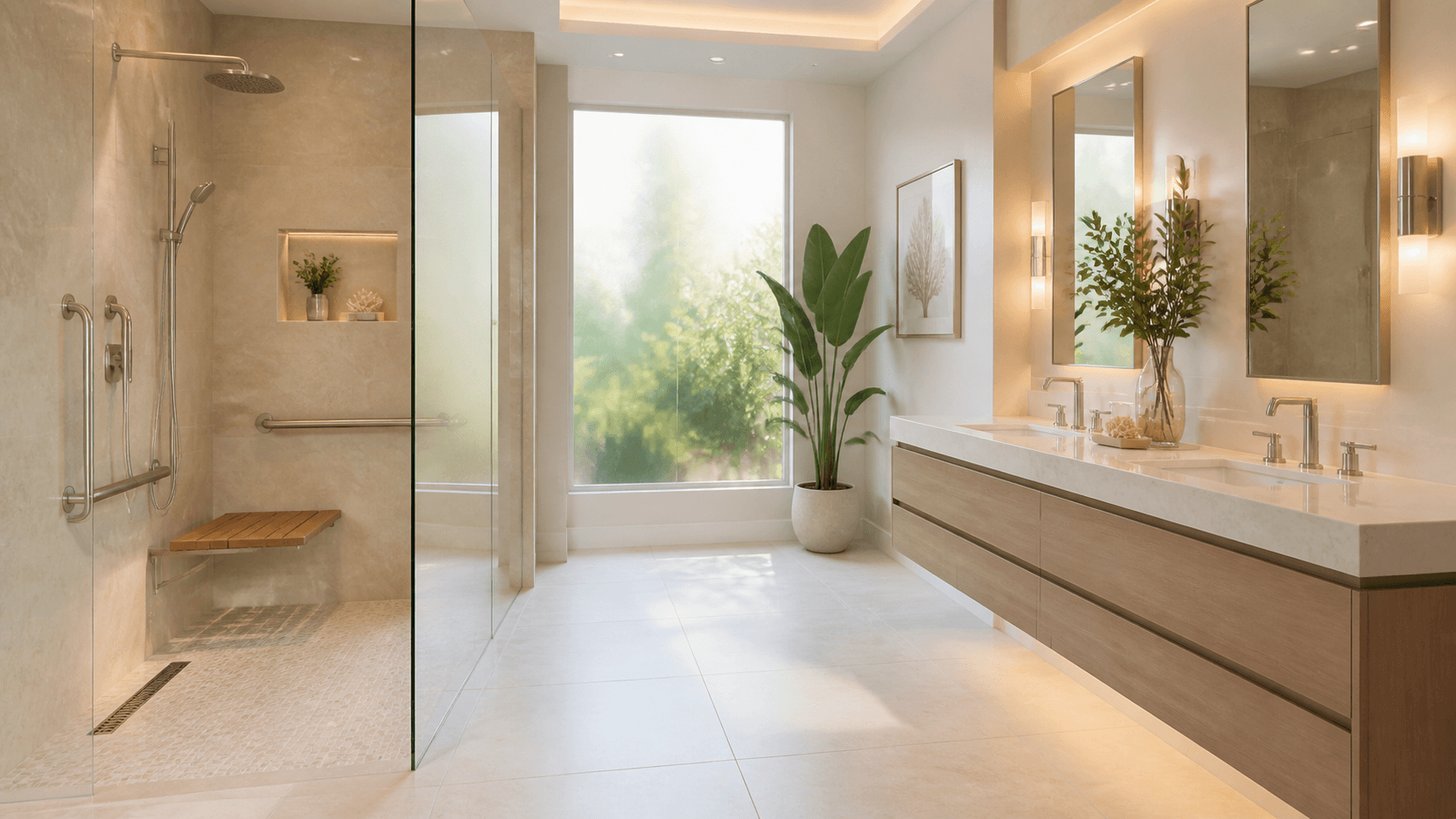
Drainage is the next key piece. Linear drains placed at the correct end of the shower, steady but gentle floor slopes, and recessed pans all work together. Curbless showers can work well here, but only if the slope and waterproofing are handled with care so water does not wander into adjoining bedroom flooring.
Storage should dry out too. Open towel shelves that let air move, vanities with ventilation, and niches in the shower that are pitched so water sheds instead of pooling in the corners all help the room reset between uses.
Detailing for Daily Use in Island Humidity
Once the big systems are right, small details make daily life easier. In showers, high-performance or epoxy grouts handle constant moisture better than soft cement grout. Thoughtful grout colors can hide light wear so the room still feels clean between deep cleans. Glass with protective coatings sheds water more easily, which matters in months when mirrors fight to stay clear.
Lighting also needs to work with steam rather than against it. That can mean:
- Sealed trims on shower recessed lights
- Indirect lighting around or beside mirrors instead of harsh, face-on glare
- Warm color temperatures that feel flattering in humid morning air
Palm Beach Island life has its own rhythms. Some owners are gone for long stretches, leaving baths closed up. Guest baths may sit unused for weeks, then see constant use over holidays. Smart fans and humidity sensors can help the room respond, switching on when moisture rises even if no one thinks to hit a switch. Materials that stay stable through long quiet periods, then sudden high use, are especially important.
Architectural character also matters. Keeping original casings, arches, or beamed ceilings, aligning tile sizes with classic Palm Beach proportions, and allowing Bermuda or Mediterranean revival details to stay present helps the room feel like it belongs to the house, not just to a trend.
Planning a Humidity-Smart Remodel on Palm Beach Island
Planning works best in the thick of the season you actually live with. Late summer is a useful time to pay attention to how an existing bathroom behaves: which walls are always damp, which corners never quite dry, when the fan does or does not keep up. Those real-world notes become a checklist of what the remodel should address.
A practical sequence for a bathroom remodel in Palm Beach Island usually looks like this: confirm what the building or HOA allows, set the ventilation strategy, refine the layout to support airflow and drainage, then choose materials and fixtures that respect both the climate and the architecture. Much of the success will live in the parts you do not see, such as substrates, waterproofing membranes, slope, and duct paths. When those are handled with care, the marble, mirrors, and hardware can stay quiet and composed year after year, even in the heaviest island humidity.
Transform Your Palm Beach Island Bathroom Into a Luxury Retreat
If you are ready to elevate your home with a custom bathroom remodel in Palm Beach Island, our team at H & H Signature Renovations is here to help. We take the time to understand your style, needs, and budget so every detail feels thoughtfully designed. Schedule a design consultation today to explore layout options, materials, and finishes tailored to your space, or contact us with any questions about getting started.