Planning Around Palm Beach Heat and Salt Air
A summer afternoon in Palm Beach County can feel calm and bright, with the sliding doors open to the Intracoastal, ceiling fans spinning, and the AC running nonstop. It looks effortless, but the house is working hard in the background. When you plan a whole home renovation in Palm Beach County, you are not only choosing refined finishes; you are deciding how the home will handle heat, humidity, and salty air every single day.
Coastal humidity, salt, and hurricane season are never side notes, especially in older Bermuda or Mediterranean revival homes. If they are ignored, the result can be warped floors, sweating ducts, and sticky rooms that never quite feel comfortable. A successful renovation balances beauty with building science, from roofing to mechanical systems. The choices made months before demolition, including materials, sequencing, and permits, determine how the home feels in August and how it stands up when a storm rolls through.
Reading The House: Architecture, Exposure, And HOA Rules
Before any drawings or finish boards, it helps to read the house. Local styles each respond to humidity in their own way. Bermuda roofs with deep overhangs shade walls and help keep interiors cooler. Mediterranean revival homes often have arches, loggias, and courtyards that move air. Coastal modern homes lean into glass walls, flat roofs, and large openings that need careful detailing to stay dry and comfortable.
During a pre-design walk-through, attention typically goes to details that shape the renovation plan, such as:
- Orientation to the sun and prevailing breezes
- Shaded sides of the home versus sun-baked elevations
- Existing roof assemblies and how they are vented or not vented
- Current window and door performance, including any signs of leaks
In Palm Beach County, HOA rules, condo boards, and historic district reviews can limit exterior changes, roof colors, and window styles. Dock setbacks and lot coverage rules can also influence what is possible on the interior. An early survey and structural evaluation can reveal hidden issues like moisture in concrete block walls, undersized mechanical spaces, or unvented flat roofs. All of this informs layout changes, ceiling designs, and where new systems can be integrated.
Building A Humidity-Ready Shell
The building envelope is the first line of defense. Roofing assemblies in this climate must stand up to heat, sun, and wind. High-performance underlayments, careful fastening, and proper flashing all help protect the rest of the work below. When the roof is correct, interior finishes and systems have a better chance of lasting.
Wall strategies for a whole home renovation in Palm Beach County often include insulated concrete block, selective use of closed-cell foam, and careful planning of vapor control. The goal is to manage moisture, not trap it. Each wall assembly should be designed to dry in both directions, with insulation and finishes matched to that plan.
Windows and doors matter as much for comfort as they do for safety. Impact-rated units with Low-E glass, proper flashing, and coastal-grade hardware create a tighter, more durable shell. The brand name is less important than the details:
- Correct size and shimming for each opening
- Continuous flashing at sills and heads
- Sealants that can live in strong sun and salt air
- Integration with stucco, stone, or siding without weak spots
As homes become tighter, cracks and gaps can no longer be relied on to handle moisture. Air sealing and controlled ventilation, often with energy recovery ventilators or dedicated dehumidifiers, keep indoor humidity in a much better range. This is what protects wood floors, art, and custom millwork through long, damp summers.
Kitchens And Baths Designed For Constant Moisture
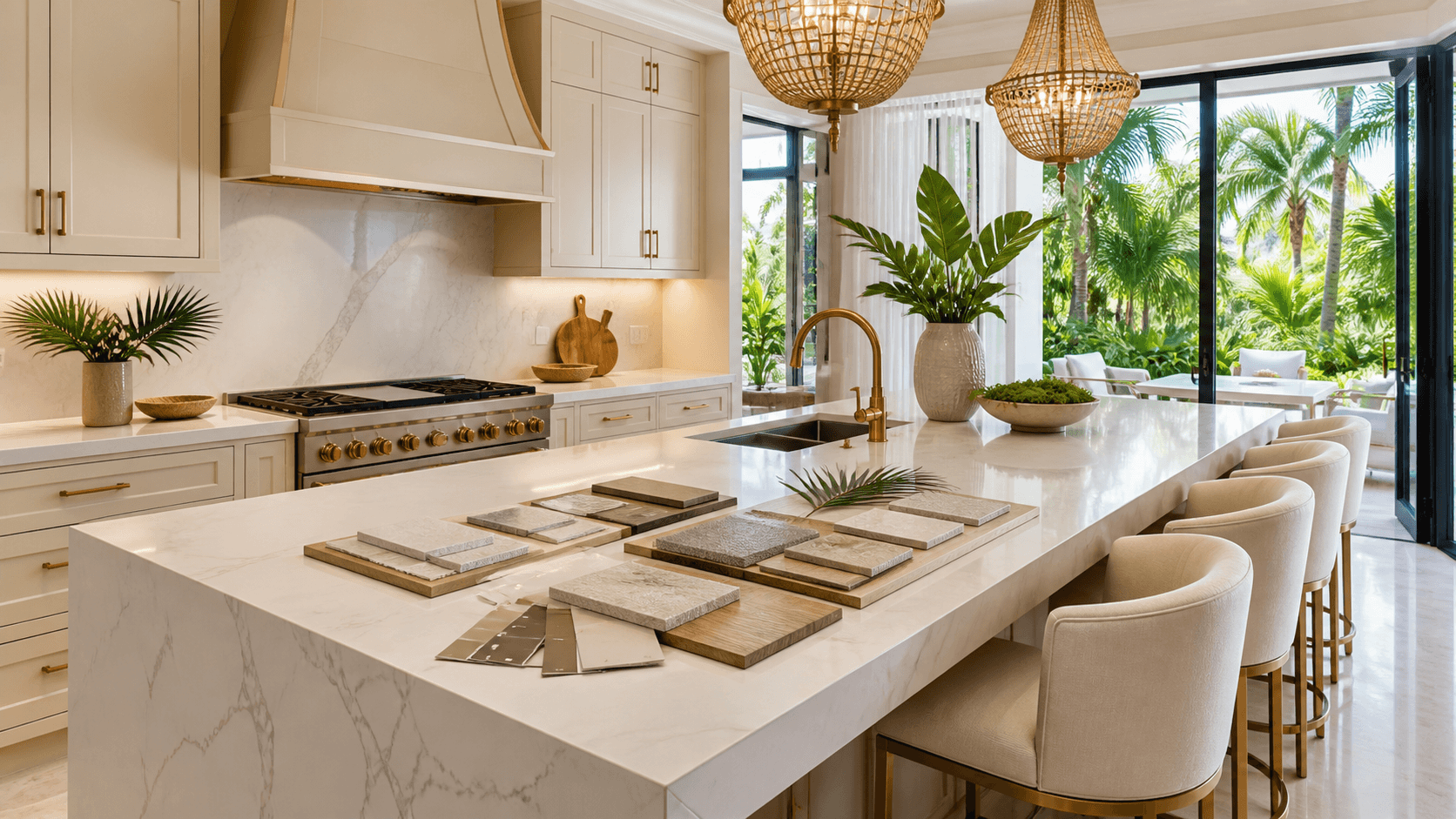
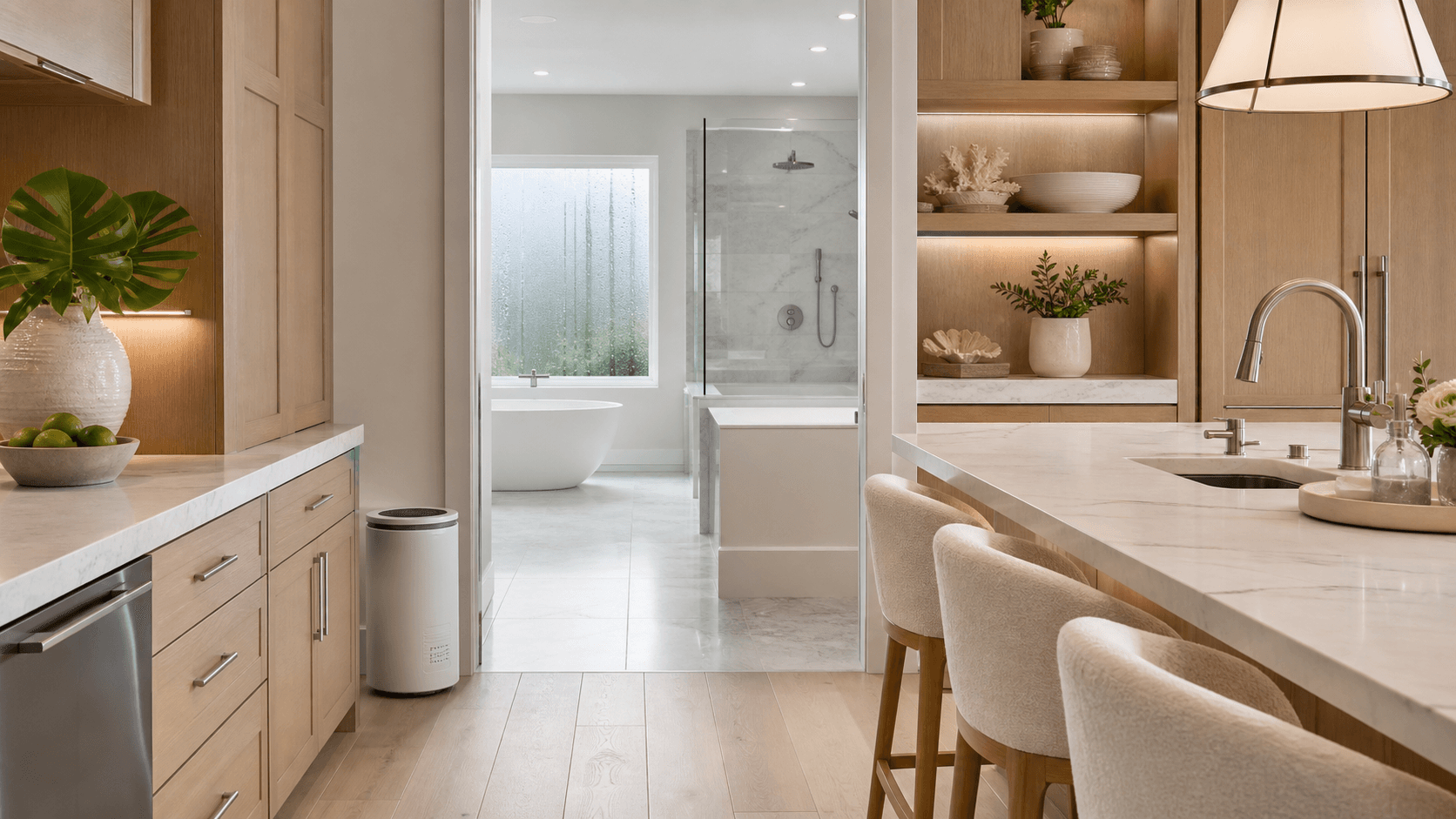
Kitchens and baths are the most exposed to steam, spills, and daily wear, so materials and details matter. Quartzite and porcelain are strong choices for counters, along with large-format porcelain or stone tile underfoot. Epoxy grout holds up better in wet zones than standard grout. For cabinetry, marine-grade or furniture-grade construction and moisture-resistant substrates provide a solid base.
Cabinet and millwork details help them age well in humid air:
- Sealed edges on panels and shelves
- Proper clearances at floors and walls
- Toe-kick ventilation to let air move behind taller runs
- Hardware chosen for salt and humidity, not just appearance
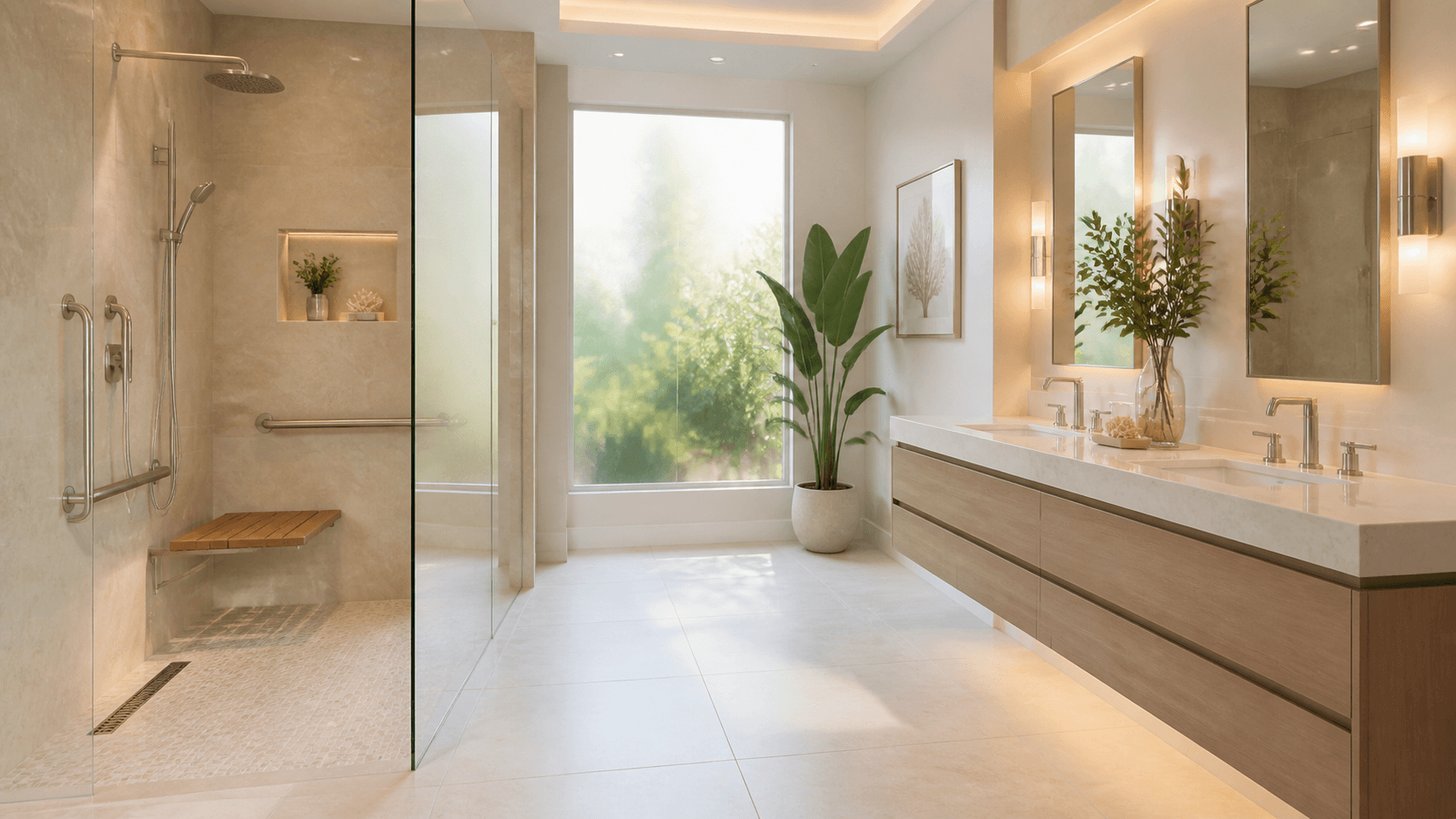
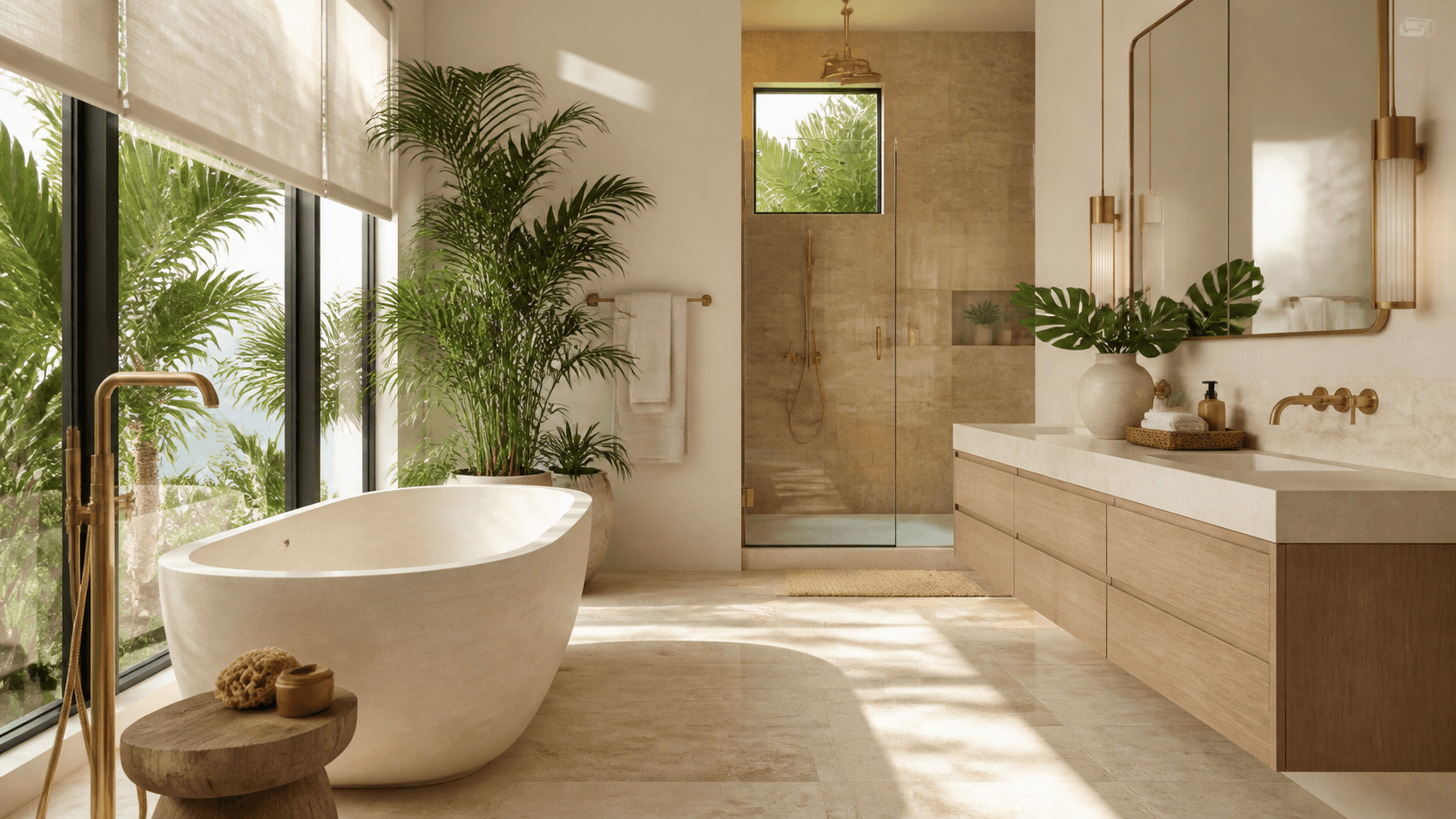
In baths, planning starts with waterproofing. Showers benefit from sheet membranes that wrap walls and floors, carefully sloped pans, and linear drains that move water away quickly. Quiet, correctly sized exhaust fans vented to the exterior help keep mirrors clear and grout drier. Fixtures and trims should be rated for coastal environments so finishes do not fail early.
Mechanical coordination ties it all together. Supply and return vents should be located so they do not blow directly on tall cabinet runs, glass shower enclosures, or intricate coffered ceilings. Good airflow reduces the risk of condensation and keeps rooms feeling even and calm.
Systems That Keep The House Dry And Comfortable
Whole home renovation in Palm Beach County almost always includes serious HVAC planning. Right-sized equipment, not oversized units, tends to run longer at lower speeds, which removes more moisture from the air. Multi-story homes do well with multiple zones and sometimes separate systems for guest suites or pool houses, so each zone can be set for how it is used.
Standalone whole-house dehumidifiers are common in coastal homes, especially where there are hardwood floors, detailed millwork, or art collections. By setting a target humidity, often separate from the temperature, finishes are protected during shoulder seasons when the AC does not need to run as much but the air is still damp.
Plumbing planning also responds to humidity. Insulated hot and cold lines reduce pipe sweating inside walls and ceilings. Recirculating systems can cut down on the time it takes for hot water to reach distant baths, which keeps moisture and frustration in check. Location of mechanical rooms and laundry rooms is considered so noise, heat, and any future leaks are easier to manage.
Smart controls that fit local life can include:
- Humidity sensors tied to dehumidifiers or fans
- Leak detection in mechanical, laundry, and storage rooms
- Surge protection for sensitive equipment during summer storms
- Remote access so second-home owners can monitor conditions
Material Palettes, Timing, And The Right Team
Material palettes in coastal air should look better with age, not worse. Floors might be engineered hardwood with a stable core and an appropriate wear layer, large-format porcelain that mimics limestone, or terrazzo used as a nod to historic or midcentury homes. For stone and surfaces, dense limestones, quartzites, and porcelain slabs tend to perform well on exterior-adjacent walls and floors when paired with the right sealers and finishes.
Hardware and metal finishes deserve attention. Marine-grade stainless and PVD finishes handle salty air with less pitting. Unlacquered brass can work as well when the patina is intentional and the homeowner is comfortable with that change over time. On walls, breathable paints, limewash, and plaster finishes let older Mediterranean revival interiors release moisture more easily. UV-resistant fabrics on sofas and window treatments near glazing and loggias help color and texture last longer.
Timing a whole home renovation in Palm Beach County around seasons and storms is its own kind of planning. Roofing and major exterior work usually happen before the peak of hurricane season when possible. The wettest months often become a useful window for interior trades, millwork, and finishes. Longer lead times for custom windows, doors, and cabinetry, plus HOA or historic approvals, need to be built into the calendar from the start.
During construction, many homeowners arrange temporary living, storage for furnishings in climate-controlled spaces, and special care for art and wine collections. Experienced contractors sequence demolition and dry-in work so that, if a storm forms in the Atlantic mid-project, the home can be secured quickly and the unfinished interiors are protected. A team that understands Palm Beach architecture, humidity, and local rules, and that plans for both comfort and resilience, creates a home that fits its coastal setting with confidence.
Transform Your Living Space With a Trusted Local Team
If you are ready to reimagine how every room in your home looks, feels, and functions, our team at H & H Signature Renovations is here to help guide the process from concept to completion. Explore what is possible with a carefully planned whole home renovation in Palm Beach County tailored to your lifestyle, timeline, and budget. We will walk you through design options, materials, and construction details so you can move forward with confidence. To discuss your project and next steps, reach out and contact us today.