Sound, Privacy, and the Palm Beach Bathroom
A quiet primary bathroom is not about silence; it is about softness. On a calm early morning in a Palm Beach condo or a Bermuda-style home, cool stone underfoot can feel wonderful, but every faucet, fan, and closet door should not echo into the bedroom. When the space is hard, bright, and full of shiny finishes, even small sounds feel loud.
For many Palm Beach homes, the primary suite sits over terrazzo, beside concrete party walls, or under a flat concrete slab. Sound tends to bounce and travel. In a primary bathroom remodel in Palm Beach, we look at sound control as a quiet kind of luxury. The goal is simple: keep voices, water, and mechanical noise contained, while still keeping that clean coastal look everyone loves.
We are not talking about gadgets or quick fixes. We are talking about substrates, finishes, and details that make a room feel acoustically calm in a humid, hurricane-prone climate. The right layers under the tile, behind the walls, and above the ceiling all add up to a bathroom that feels softer to live in every single day.
Floors That Feel Solid and Sound Soft
The floor sets the tone, both visually and acoustically. In many Palm Beach condos and townhomes, we work over concrete slabs, and association rules limit what can be changed. That makes the floor build-up even more important.
For quieter, more solid-feeling floors, we often look at:
- A properly prepared slab, ground and patched so it is flat and stable
- A crack isolation membrane that also helps reduce that hollow tap sound
- A high-density acoustic underlayment rated for multi-family use
- Flexible setting materials that move slightly instead of popping or drumming
Tile choice matters too. Large-format porcelain is durable and easy to clean, and with a matte finish it can help reduce slip without feeling rough. Honed limestone has a softer visual and slightly softer sound, though it needs more care. Terrazzo-look porcelain offers that Palm Beach mid-century feel but is lighter and more forgiving than real terrazzo.
Sound on a tile floor is affected by:
- Tile size and thickness, larger, thicker tiles often feel more solid
- Tight grout joints that keep the surface more continuous
- The stiffness of the setting bed, which changes the way footsteps sound
Radiant heat comes up often in primary suites. Hydronic or electric radiant under tile means no fan noise from a heater and no grille to rattle. When we detail perimeters, thresholds, and shower curbs carefully, we also keep impact noise from traveling into the bedroom. Little gaps, soft joints, and well-planned transitions do a lot of quiet work.
Walls, Ceilings, and the Quiet Behind the Tile
A calm primary bathroom starts inside the walls. Where we can, we like to separate the bathroom and bedroom with double-stud or staggered-stud framing. That makes it harder for vibration to pass straight through. Mineral wool insulation in those cavities adds a noticeable layer of sound control, especially for voices and shower noise.
At the edges, acoustic sealant at plates and penetrations helps close those tiny air paths that leak sound. Around plumbing, outlets, and switch boxes, careful sealing makes a surprising difference. These details are hidden when the job is done, but you feel them every morning.
Behind the tile, we select from:
- Cement board, very stable and moisture-friendly around wet areas
- Foam backer boards, lighter and less conductive, often helpful on exterior walls
- Sound-rated drywall at partitions that share with bedrooms or nurseries
In Palm Beach, salt air and humidity are always present, so we choose systems that handle moisture without swelling or breaking down over time. Every layer has to be both water-wise and sound smart.
Ceilings can leak more sound than people expect. Recessed lights, exhaust fans, and access panels all puncture the barrier. To keep sound from traveling into the floor above or down into your suite, we look at:
- Airtight, sealed can light housings
- Acoustic putty pads around electrical boxes
- Quiet, properly ducted fans that vent all the way outside
In a hurricane zone, any roof or exterior penetration has to be detailed with care. We coordinate with the broader building envelope so that the fan is quiet, the duct path is smooth, and the structure stays protected.
Showers, Tubs, and the Acoustics of Water
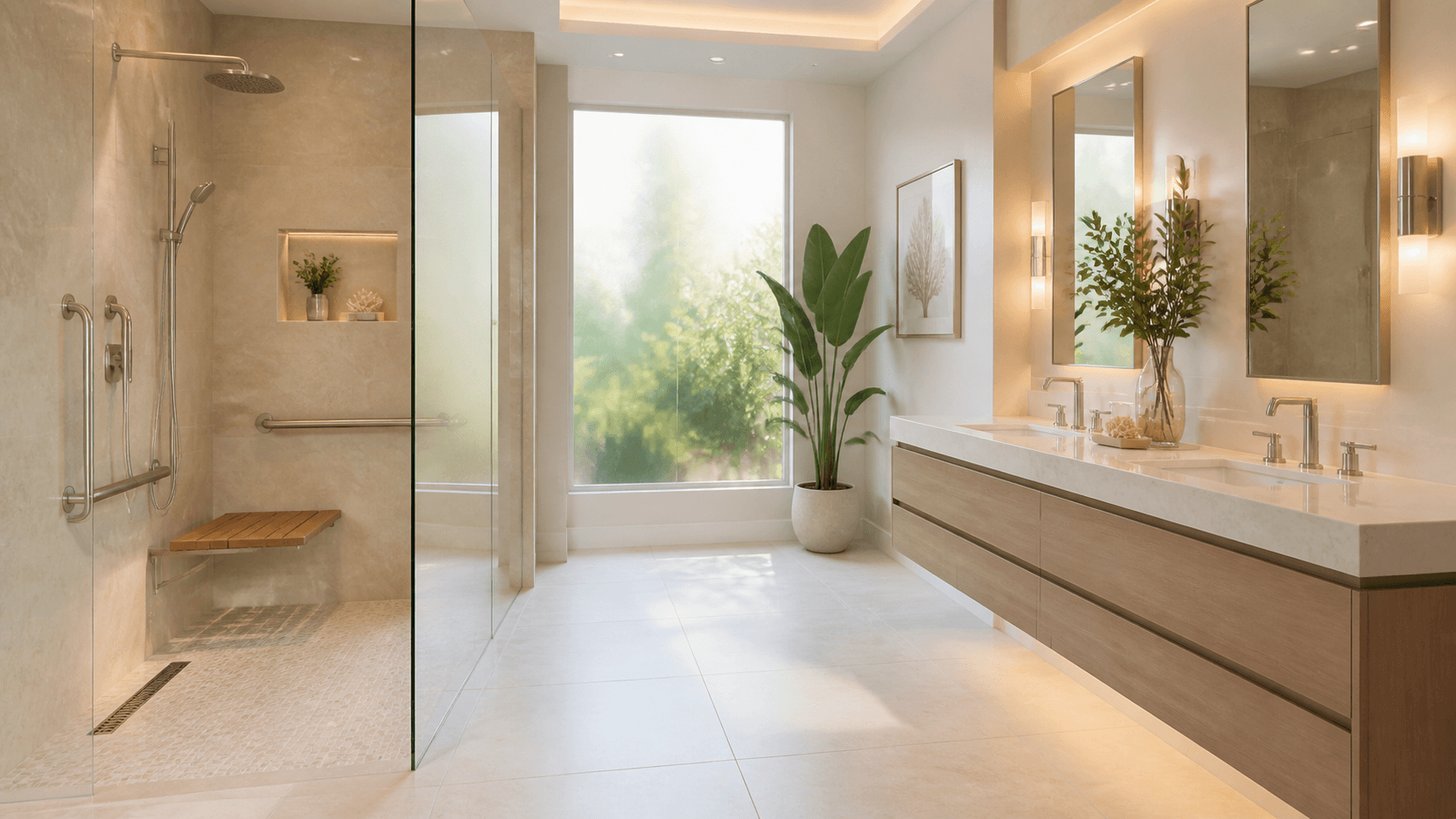
Water has its own sound story. A fully tiled, curbless shower with a linear drain feels calm and restrained, but it has to be built correctly to sound that way. A solid mortar bed or well-supported foam base can make the floor feel firm instead of drum-like. The slope and drain placement matter too, because the way water runs toward the drain changes the sound it makes.
A few shower choices that affect sound:
- Linear drains versus center drains, linear often spreads the sound more gently
- Curbless entries that reduce the click of stepping over a curb
- Fully tiled ceilings that soften splash, instead of bare drywall above
Glass is another big player. Frameless glass, when it is thicker, feels richer and less rattly. Door gasketing and soft closers keep doors from clacking. When we decide whether to fully enclose a shower or leave it partly open, we also think about how much echo you want in the room and how much steam and sound you want to keep contained.
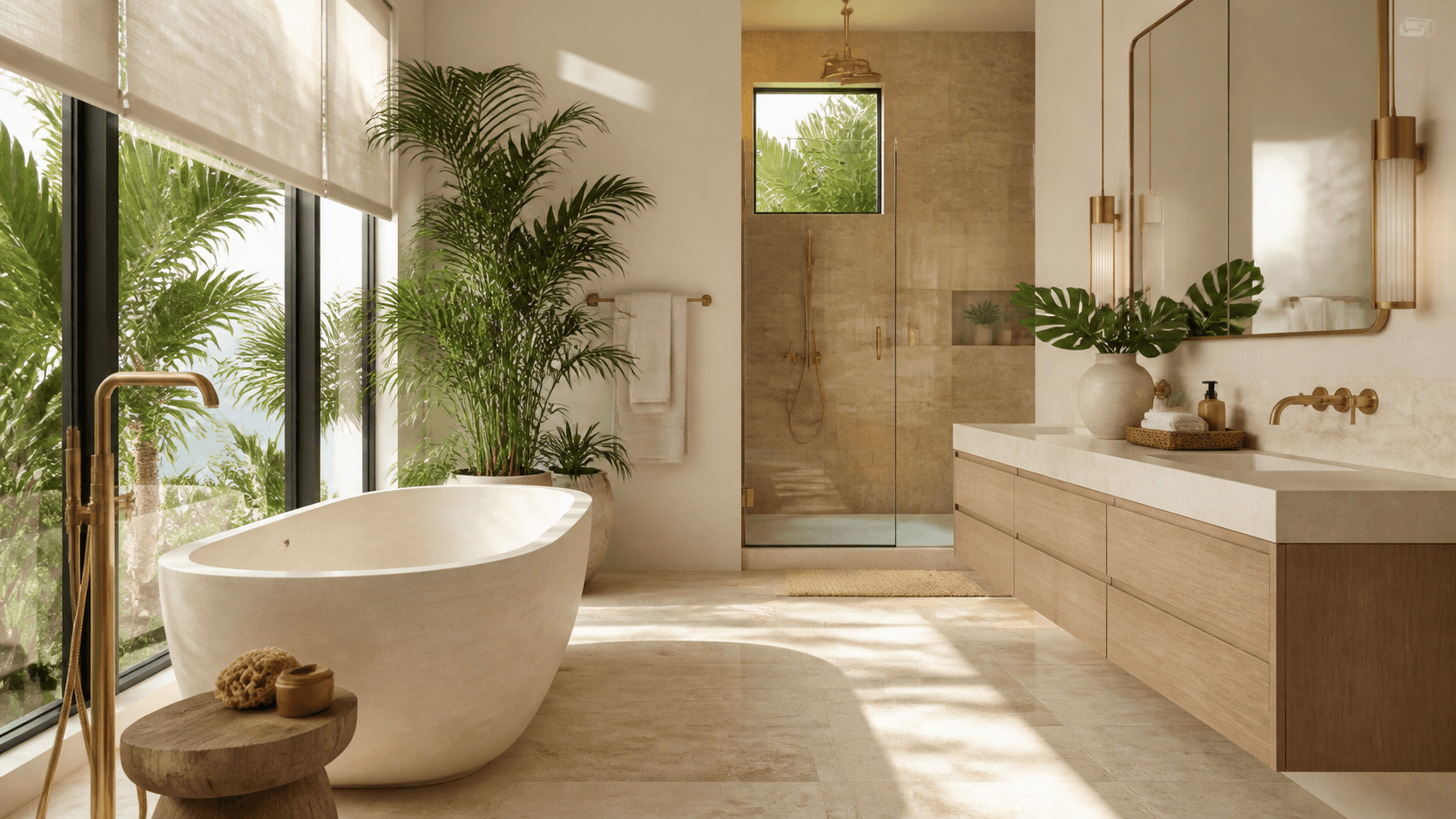
Tubs all sound different as they fill. Cast iron tubs feel solid and tend to damp a lot of the ringing that comes with running water. Solid surface tubs sit somewhere in the middle, warm to the touch and fairly quiet. Acrylic tubs can amplify sound more, especially if the shell is thin or not well supported from below.
Placement of the tub matters too:
- Along an exterior wall with impact glass, where sound can bounce differently
- Away from shared interior walls when possible
- Near existing plumbing stacks in older Mediterranean revival homes, where we have to respect the structure
With considered planning, the rush of a filling tub can feel like a soft background sound, not a loud event that wakes the whole suite.
Vanities, Storage, and Surfaces That Soften Echo
Hard surfaces give that crisp Palm Beach look, but too many in one room create echo. Vanities and storage are a good place to bring in quieter details without losing a clean line. Slab-front cabinetry reads modern but can close with a harder thud if the hardware is not chosen carefully. Framed fronts, inset doors, and soft-close hinges and glides keep movement smooth and muted.
In this climate, we favor moisture-tolerant cabinet construction so doors do not warp and drawers do not stick. Marine-grade plywood cores, high-quality veneers, and careful edge details handle humidity while still looking refined.
Countertops and sinks carry their own sound as well:
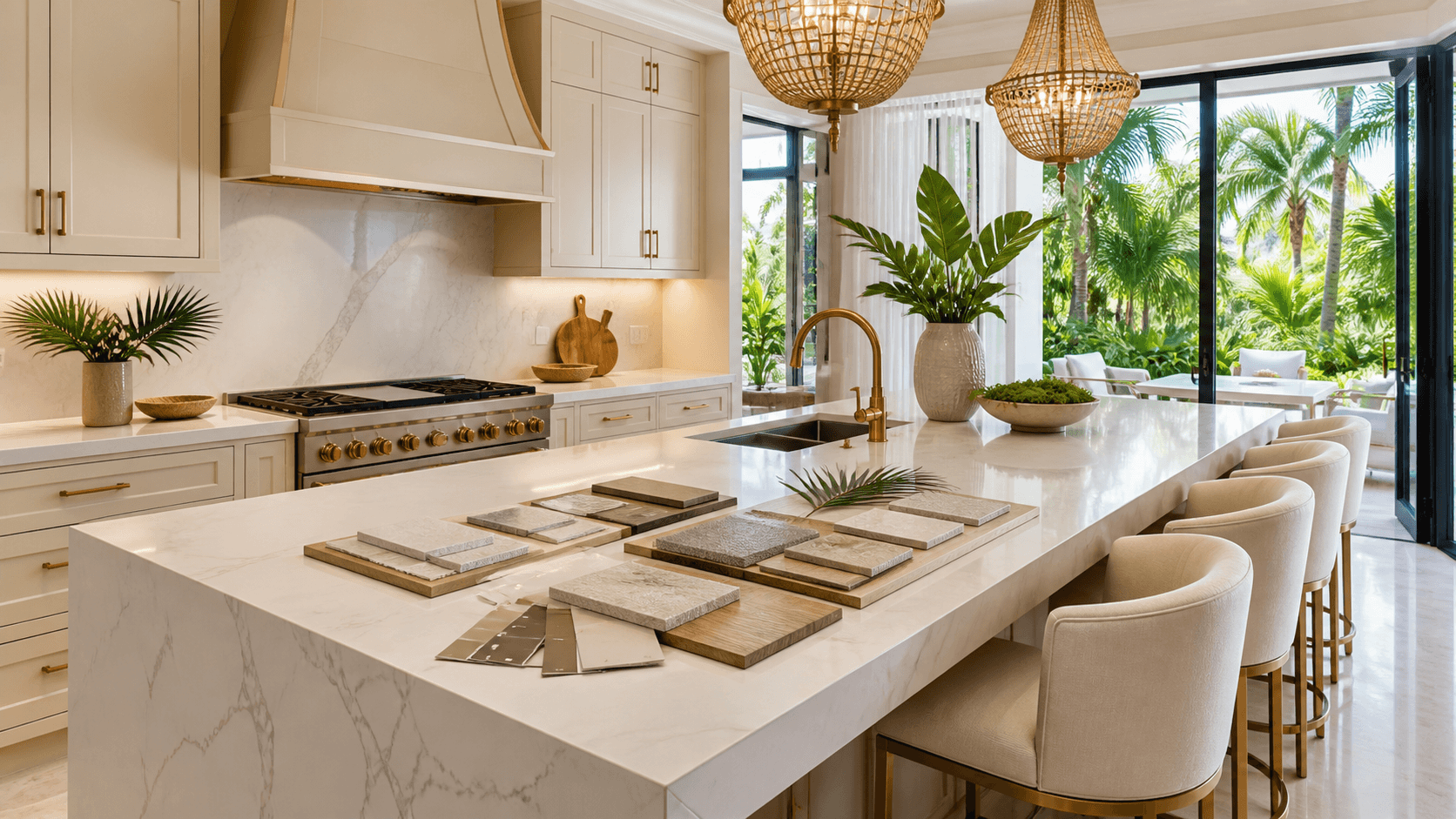
- Quartz with a honed finish that feels solid and mutes small impacts
- Honed marble for a softer visual and touch, with some extra care for etching
- Porcelain slabs that are thin yet dense, often very quiet when well supported
Vessel sinks can amplify splashing and faucet noise since the bowl is exposed. Undermount sinks usually sound calmer because they sit in a cutout and the counter absorbs part of the impact. Thicker countertop sections and solid undermount installation make the whole vanity feel heavier and quieter to use.
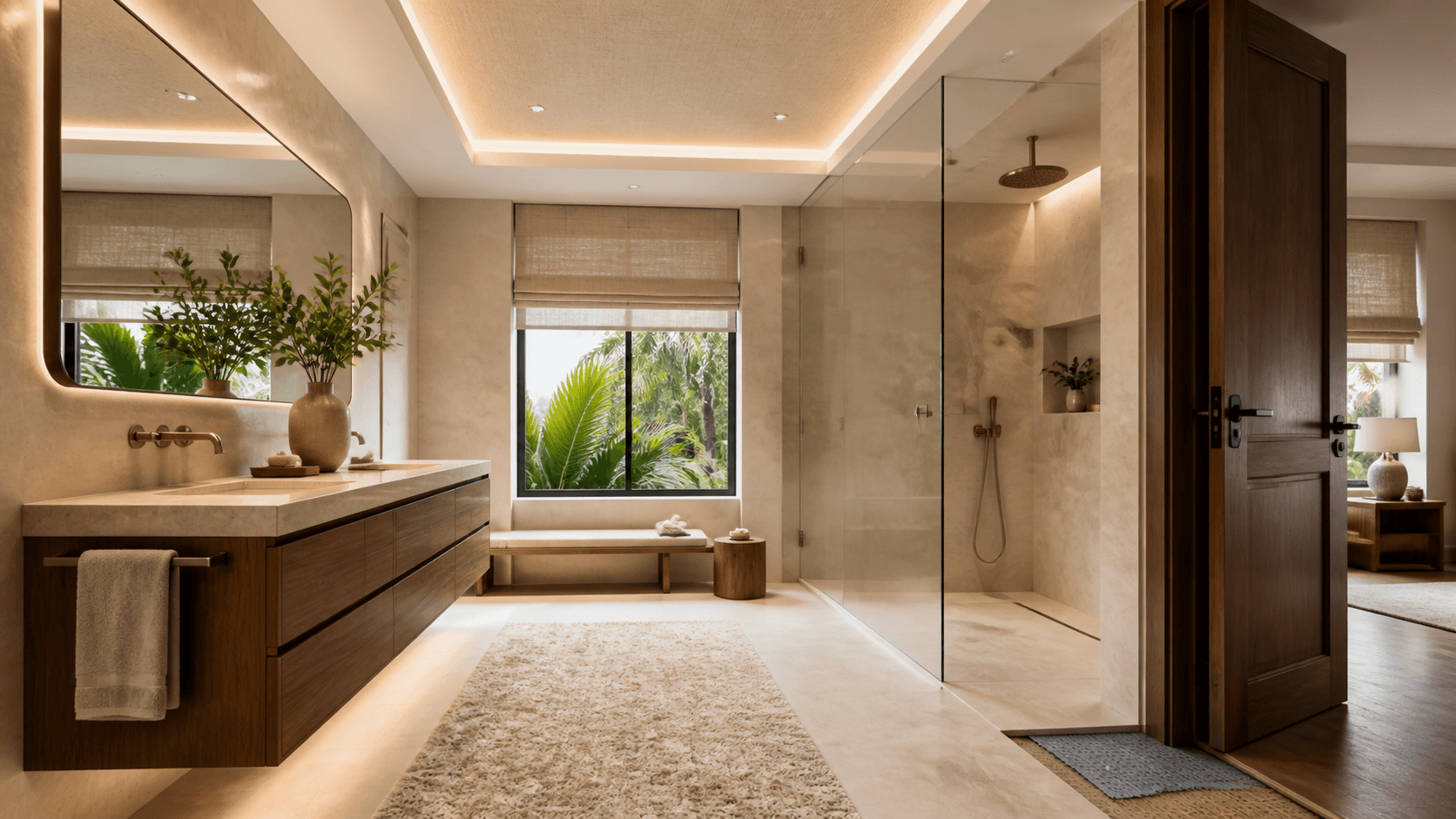
Textiles are simple, powerful sound helpers that still fit a coastal palette. Linen Roman shades or relaxed wovens at windows absorb echo without blocking all the light. Tailored shower curtains, when appropriate for the layout, soften both sound and glare. Upholstered benches or small ottomans in dressing areas break up hard planes and make the suite feel more like a private retreat.
On the walls, we often choose:
- Limewash finishes with a soft, clouded texture
- Matte paints that keep light gentle and reduce harsh reflections
- Subtle textured treatments that add depth without visual clutter
All of these keep the look bright and coastal, without the hard, echo-prone feel of all-gloss surfaces.
Planning a Calmer Primary Bathroom in Palm Beach
Quiet is not something that happens at the end of a project. It is considered from the first sketch of a primary bathroom remodel in Palm Beach. When the structure, the HOA or condo board rules, and the way you use your primary suite are understood from the start, it becomes much easier to select assemblies and materials that naturally keep sound in its place.
It helps when homeowners share what really matters. Maybe there is a neighbor above, a shared wall with a nursery, or an early riser who does not want to wake a late sleeper. Those details guide where to invest in acoustic walls, upgraded underlayments, or thicker glass, and where a simpler approach is fine.
At H & H Signature Renovations, silence and soft sound are treated as core materials, alongside stone, tile, and wood. When sound is planned along with proportion, light, and finish, the Palm Beach bathroom feels calm, private, and quiet enough that you notice what you do not hear.
Transform Your Palm Beach Master Bath Into a Relaxing Retreat
Ready to elevate your space with a tailored luxury design? Schedule your master bathroom remodel in Palm Beach and let H & H Signature Renovations guide you through every step, from concept to completion. We focus on thoughtful layouts, premium finishes, and meticulous craftsmanship that reflect how you actually live. If you have questions or prefer to talk through ideas first, simply contact us to get started.