Balancing historic detail with modern comfort in Palm Beach baths
Balancing historic charm with modern comfort in a Palm Beach bath is a very real design challenge. Many older homes and condos have beautiful details, but the baths can feel cramped, damp, or tired. In practice, you do not have to choose between character and comfort.
We see this often in compact Mediterranean Revival baths. There might be original hex tile underfoot, a deep arched window that filters the light, and a heavy cast-iron tub that now feels too high to climb into. The space is full of history, but it was not built for current expectations around accessibility, storage, or humidity control in coastal Florida. In a historic home renovation in Palm Beach, the goal is simple: keep what matters, upgrade what does not work, and make every new choice feel as if it belongs.
Honoring a 1920s bath without freezing it in time
When we walk into a 1920s bath, we look for what still feels right and what clearly does not. The original hex mosaic might be charming but cracked. The tub might be beautiful but impractical. The plaster arches and window proportions often feel timeless, so those become important clues.
Historic renovation in Palm Beach bathrooms usually means:
- Respecting the original architectural language
- Working within historic districts, condo rules, or HOA guidelines
- Protecting the home from moisture and salt air in a discreet way
- Improving comfort and accessibility without turning the room into a theme set
We think in layers: architecture, materials, fixtures, then technology. When these layers are in tune with each other, updates feel inevitable rather than trendy. That is often the difference between a bath that will still feel right in twenty years and one that starts to age as soon as the grout dries.
Reading the architecture before you touch the tile
Before any tile comes up, the house has to be read. Style is the first clue. In Palm Beach, a bath might sit inside:
- Mediterranean Revival, with arches, stucco, and small mosaics
- Bermuda-inspired, with cleaner lines, shutters, and softer colors
- Early ranch, with low ceilings and straightforward trim
- A layered home that has been altered again and again
Each style suggests different tile patterns, moldings, and fixture profiles. Mediterranean settings often work well with small mosaics, soft off-whites, and curved profiles. Bermuda-inspired homes lean toward simpler, crisp details and lighter tile fields.
We catalog what is worth saving:
- Cast-plaster details or coved ceilings
- Original window sizes and sill heights
- Niches, built-in cabinets, or floor inlays
- Door casings and even old metal vent grilles
Then we look at structure and envelope. Coastal Florida often brings thick masonry walls, concrete slabs, and sometimes hidden termite damage in old framing. Moisture migration and salt air matter. Some elements can be restored, others must be rebuilt so the bath does not trap humidity or leak into a neighbor's unit below.
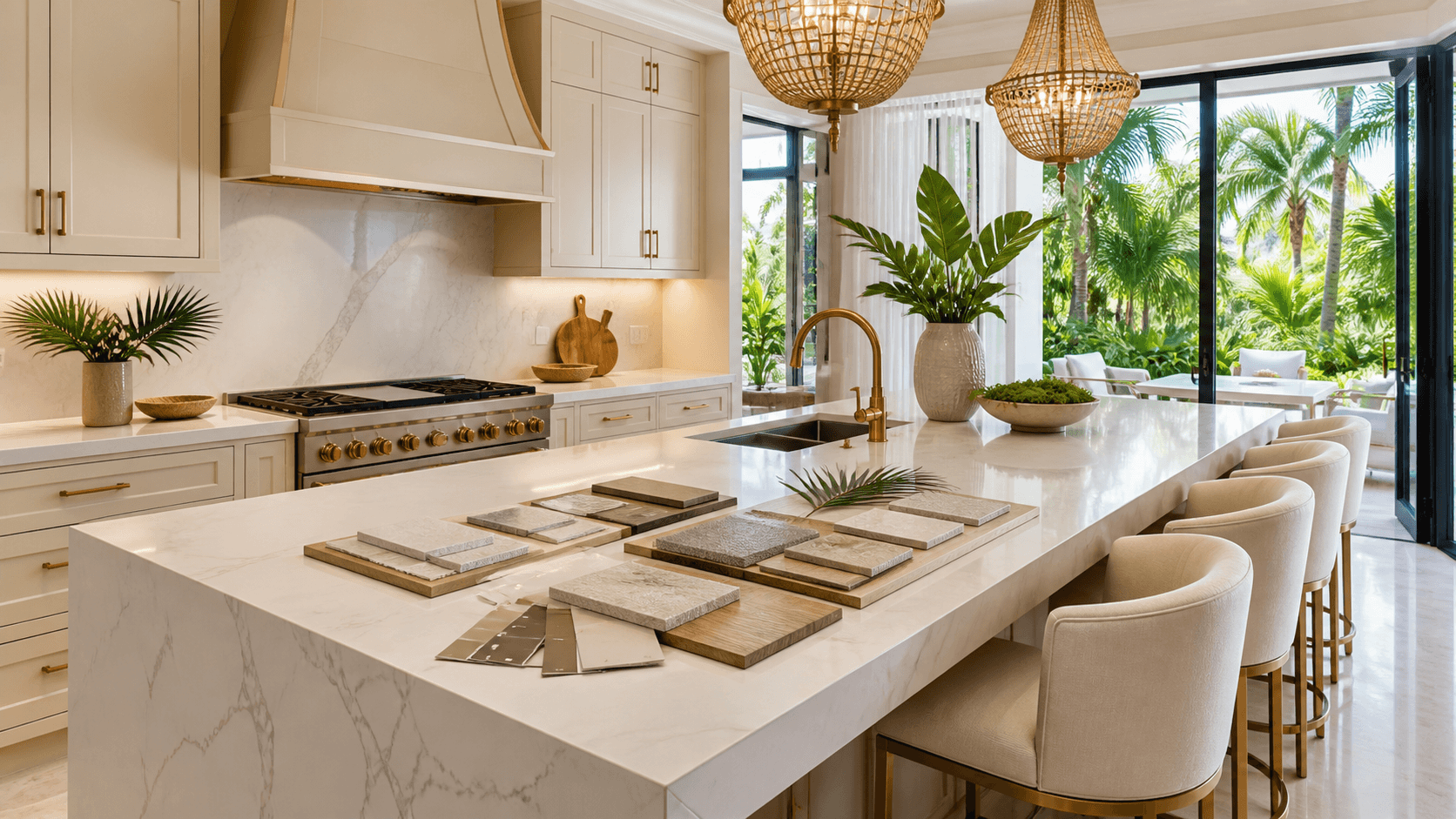
If the home sits in a historic district or a condo building, early coordination is key. Changes such as new window configurations, exterior vent caps, or slab cuts for plumbing can trigger board review. Clear drawings, tile and stone samples, and a calm, consistent design story tend to help approvals go more smoothly.
Materials that age gracefully in coastal humidity
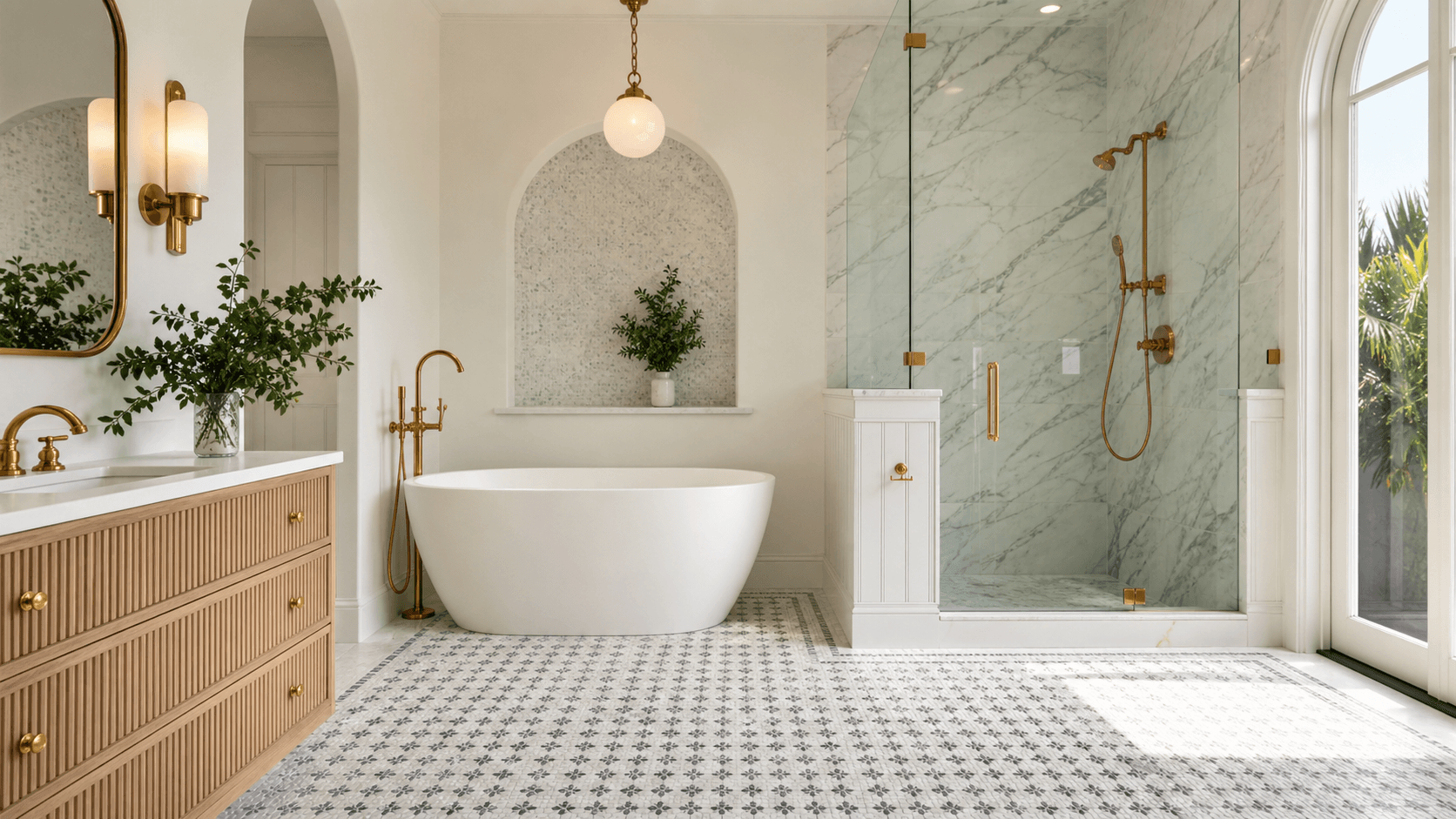
Once the architecture is understood, materials can be selected that respect the era and also stand up to a humid, salty climate. Original hex tile can often be echoed with porcelain mosaic, which is easier to maintain and less slippery when wet.
We often compare:
- Porcelain mosaics that mimic historic hex or penny tile
- Honed marble for softer sheen and better traction versus very glossy stone
- Unlacquered brass that develops a natural patina versus plated finishes that can pit in salt air
Behind the tile, the assembly matters just as much. In a coastal bath, attention tends to focus on:
- Continuous waterproofing behind all wet walls
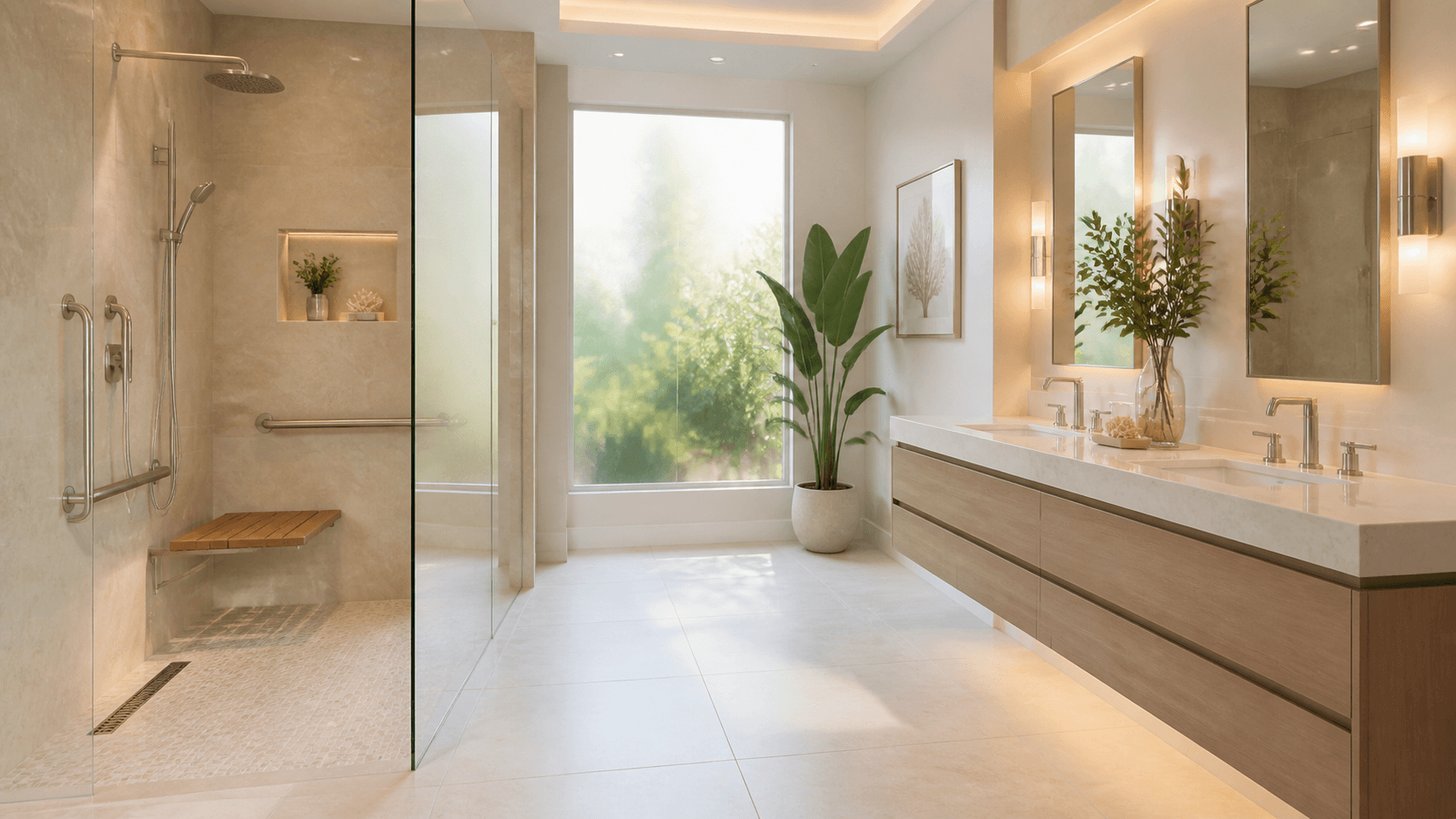
- Curbless showers with linear drains and correct floor slopes
- Floor drains or secondary drains where appropriate
- Venting paths that protect exterior facades and historic stucco
Cabinetry is another significant piece of the puzzle. In a humid climate, we lean toward:
- Marine-grade or moisture-resistant plywood boxes
- Solid wood doors in stable species
- Professional lacquer schedules that hold up in baths without constant conditioning
- Furniture-style vanities that feel at home in older architecture
Countertops see sunscreen, skincare products, and salt from the air. Quartz that recalls old marble, dense limestones that resist etching, or pairing handmade zellige tile with more durable counters in high-contact zones can all support daily use without feeling overly contemporary.
Quietly integrating modern comforts and tech
Good baths in Palm Beach work quietly behind the scenes. Mechanical upgrades are a significant part of that, but they do not need to be visually dominant.
Key comfort moves include:
- Properly sized, baffled exhaust fans with low sound levels
- Supplemental dehumidification that ties into the larger HVAC strategy
- Thoughtful routing of ducting so historic plaster or coquina facades stay intact
Comfort can be layered in without visual clutter. Radiant floor warming under classic mosaic is a good example. It keeps tile pleasant underfoot without changing the look. Wall-hung toilets can disappear behind paneled wainscoting so the room reads more like a traditional dressing room than a utility space. Recessed niches that align with existing sightlines feel intentional rather than scattered.
Smart features should serve Palm Beach life, not turn the bath into a gadget showroom. Useful upgrades often include:
- Thermostatic shower valves that keep temperature steady
- Timed ventilation controls so fans actually run long enough
- Warm-dim LED lighting that shifts from bright morning task light to softer evening light
Restraint is important. Voice-controlled faucets or screens in mirrors tend to age fast in historic settings. Thoughtful dimmers, concealed speakers, and low night lighting can make the room feel quietly luxurious without competing with the architecture.
Respecting Palm Beach rules, boards, and neighbors
Many Palm Beach baths sit in condos or co-ops, where there are as many rules as there are tiles. Typical concerns include:
- Wet-over-dry restrictions that limit where showers and tubs can move
- Sound attenuation under new tile so footsteps and water do not carry
- Limited wall cavity space for new plumbing and venting
- Strict construction hours and seasonal schedules
In coastal and historic zones, flood elevation, window size, and storm protection also come into play. You may not be able to enlarge a window, even if additional light would feel welcome. Hurricane-rated glazing or shutters might need to be folded into the bath plan so the room still feels balanced when those elements are closed.
Good drawings, clear soundproofing details, and finish boards that lean timeless rather than trendy tend to sit better with boards and neighbors. Seasonal timing matters as well. Many full renovations schedule the loud, disruptive work for late summer, then complete surfaces as humidity allows so everything is cured and working smoothly before seasonal residents return.
Crafting a bath that will still feel right in 20 years
The most successful Palm Beach baths feel like they belong to the house, not to a passing mood. When you think about a historic home renovation in Palm Beach, it helps to treat the bath as one chapter in the whole story. Colors, moldings, and materials should link to nearby rooms, even if the fixtures are new.
One useful way to begin is to gather a few images of historic Palm Beach properties that feel close to your home's era. Note which details feel authentic, then make a clear list of what really matters for daily life, such as a larger shower, better humidity control, or more comfortable lighting. When the design and construction team reads both the architecture and those priorities carefully, the finished bath can feel as if it has always been there, while working quietly and reliably through long, humid summers, guests, and everyday routines.
Preserve Your Home's Character With Expert Renovation
If you are ready to honor your home's history while upgrading it for modern living, we invite you to schedule a consultation for historic home renovation in Palm Beach. At H & H Signature Renovations, we take the time to understand your home's story, architectural details, and your vision before proposing a plan. Reach out today to discuss your project goals, or contact us with any questions about how we can help.